Tackling COVID-19 vaccination barriers in hard-to-reach areas of Eswatini
With COVID-19 vaccination coverage at around 28 per cent in Eswatini, Doctors Without Borders (MSF) is working to support the Ministry of Health’s national campaign to increase coverage, by vaccinating vulnerable people in the most remote and rural communities in the Shiselweni region.
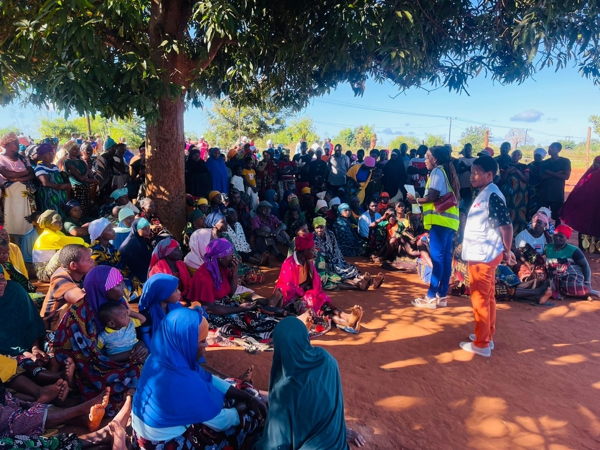
Most rural communities don’t have health facilities or vaccination points and people often travel over two hours to access basic healthcare. Limited availability of public transport adds an extra barrier to reach such services. People who want to get vaccinated against COVID-19 face the same problem.
“After seeing the increase in the number of people dying from COVID-19, I took the decision to vaccinate my entire family. We hitchhiked for about an hour to our nearest clinic, but when we got there, we were turned away as the clinic did not have any COVID vaccines,” says Nonhlanhla Motsa, while waiting to get vaccinated at the mobile MSF vaccination site in the village of Mhlwahlweni.
In a country fighting a dual HIV/TB epidemic, there is a lot of fear and stigma around COVID-19 and many people are hesitant to get vaccinated. In response, our teams have put in place health promotion activities to dispel myths about vaccines and provide correct information. Teams of rural health motivators go door-to-door in the community to share information about COVID-19 and encourage people to get vaccinated at the mobile vaccination sites.
“Some people tell us they worry the vaccine might impact their mental and sexual health, but we reassure them that the vaccine has not, and will not, interfere with either,” says Fikile Mabuza, an MSF health promoter in Shiselweni.
“We also see people who are concerned about mixing different vaccines. Before, the recommendation was not to mix vaccines, but now the Ministry of Health recommends a different vaccine for the booster shot,” says Mabuza. “We tell patients this, but some people decide not to take the booster shot if it is not the same type of vaccine as they took before.”
After two weeks of vaccinating people in the area, our mobile teams have administered a total of 7,025 doses of COVID-19 vaccines in different locations.
MSF has been providing HIV/TB services to rural communities in the Shiselweni region since 2007. In response to the first COVID-19 wave in 2020, we started providing home-based care for patients testing positive for COVID-19.
To enhance the inpatient capacity of the main health facility in the region, we extended the COVID-19 ward at Nhlangano health centre and provided oxygen concentrators, enabling medical teams there to admit and care for more COVID-19 patients.
In addition to the vaccination campaign, our teams continue to provide COVID-19 vaccination as part of our regular HIV/TB activities in the region. Health promotion teams also continue to provide important information on COVID-19 and vaccines. A toll-free telephone line and a dedicated WhatsApp line have been established to allow community members to contact us and have a more private conversation about their concerns regarding vaccines and their health.
Eswatini has the highest HIV prevalence in the world and high rates of tuberculosis. Since the COVID-19 pandemic started, we have worked to adapt our HIV/TB activities to the particular needs of vulnerable patients, to ensure continued access to essential health services without exposing them to COVID-19.
.jpg)
.jpg) MSF mobile COVID-19 vaccination
View of MSF mobile COVID-19 vaccination site in the remote area of Mhlahlwen in the Shiselweni region. MSF is supporting a national vaccination campaign by vaccinating remote rural communities.
MSF mobile COVID-19 vaccination
View of MSF mobile COVID-19 vaccination site in the remote area of Mhlahlwen in the Shiselweni region. MSF is supporting a national vaccination campaign by vaccinating remote rural communities..jpg) MSF mobile COVID-19 vaccination
View of MSF mobile COVID-19 vaccination site in the remote area of Mhlahlwen in the Shiselweni region. MSF is supporting a national vaccination campaign by vaccinating remote rural communities.
MSF mobile COVID-19 vaccination
View of MSF mobile COVID-19 vaccination site in the remote area of Mhlahlwen in the Shiselweni region. MSF is supporting a national vaccination campaign by vaccinating remote rural communities.