DRC: Ebola disease outbreak intensifies as MSF strengthens treatment and containment efforts
In eastern Democratic Republic of Congo (DRC), people have been living through insecurity and with an under-resourced health system for years. The Ebola disease outbreak due to the Bundibugyo virus – which does not yet have approved vaccines or specific treatments – is posing a major additional challenge.
Doctors Without Borders (MSF) teams are working to contain the spread of the disease and strengthen patient care, alongside the Ministry of Health.
As of 28 May, 125 confirmed cases, 906 suspected cases, and 223 deaths have been officially reported across Ituri, North Kivu, and South Kivu provinces. However, the true scale of the outbreak remains impossible to measure. Extremely limited testing capacity and difficulties in accessing certain areas mean that figures must be interpreted with caution.

Ituri, the epicentre of the outbreak, accounts for more than 90 per cent of the suspected cases that have been reported. The number of cases is increasing in Mongbwalu and Rwampara health zones.
“We are working in a particularly difficult context,” says Dr Alan Gonzalez, MSF deputy director of operations. “For the past two weeks, our ability to get supplies and teams into the affected areas has been hampered by air and land travel restrictions. Testing capacity remains insufficient, and hundreds of samples are still awaiting processing in laboratories. Isolation and care capacity are also insufficient. All of this is impeding the rapid scale-up of the response and creating legitimate anxieties and fears among communities.”
Only a limited number of specialised organisations - including MSF - are currently responding in Ituri, and people’s needs far outweigh the available capacity.

In Ituri, MSF teams have begun constructing a 65-bed Ebola treatment centre (ETC) to admit both confirmed and suspected cases. We are also supporting the Ministry of Health in caring for and isolating people who are suspected cases at the Mongbwalu General Referral hospital, as well as at the Fataki General Referral hospital.
In Bunia, the capital of Ituri, MSF has set up an isolation system for patients in Salama hospital, and we are supporting several health facilities in and around the city to strengthen the safe treatment of suspected and confirmed cases. Teams are also reinforcing infection prevention and control measures. This is critical for preventing hospital-acquired infections, especially at a time when health services are under intense pressure.
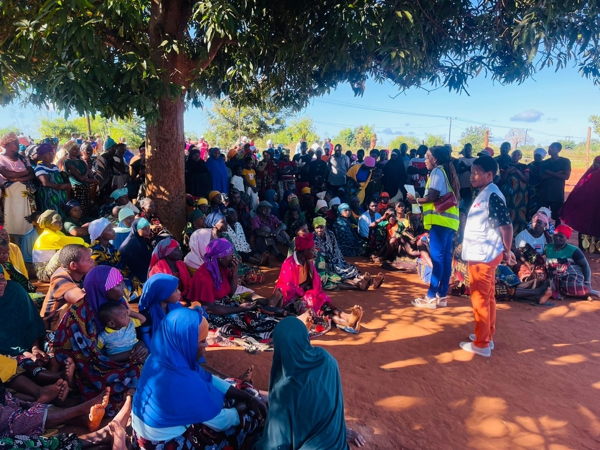
Read more about our activities in the DRCAt the same time, medical, logistics, and health promotion teams are supporting epidemiological surveillance and community awareness activities. This close collaboration with communities is crucial because, in many areas, concerns, fear, and the spread of rumors are complicating response efforts and can delay people from seeking timely care.
Beyond the Ebola outbreak itself, MSF teams are seeing how the outbreak is complicating people’s access to healthcare. In several areas, patients with other medical conditions are no longer seeking care at health facilities out of fear of Ebola or isolation measures. This raises concerns about a silent escalation of other health emergencies.

In North Kivu, the response is being organised around systems that were already established following epidemics that have affected the province in recent years, including Ebola disease, Mpox, and cholera. In Goma, an 80-bed ETC has been set up, and the first patients have been admitted. Isolation units have also been set up for people who are suspected to have the disease in several health facilities supported by MSF, including in Walikale, Mweso and Rutshuru, and at Kyeshero hospital. In Butembo, MSF has sent a medical-logistics team to assess people’s needs and identify areas for response, in collaboration with the Ministry of Health.
In South Kivu, where several cases have been confirmed, MSF teams have started setting up two ETCs in Bukavu and Lwiro. At the same time, we are training health workers in infection prevention and control measures in both cities.
An emergency medical response currently underway
“This outbreak is affecting regions already severely weakened by years of ongoing conflict and massive displacement,” explains Ewald Stals, MSF’s representative in DRC.
“In Ituri, as well as in North and South Kivu, insecurity has forced millions of people to flee their homes in search of safety. This constant movement is compounded by fragile and underfunded health systems,” says Stals. “In some health facilities, admission and isolation capacities are already reaching their limits. In this context, rapid case identification, contact tracing, and the isolation of sick people become particularly difficult, increasing the risk of further spread of the disease.”
MSF is doing everything possible to support the response. Despite security and access constraints – including border closures and flight cancellations – MSF teams are working tirelessly to ensure that vital supplies continue to arrive in affected areas. Several hundred tons of medical and logistics supplies have already been delivered to Ituri and North Kivu.
As cases continue to rise, and with the response still ramping up, the coming weeks will be critical for strengthening care capacity, accelerating testing, and maintaining access to essential healthcare in affected areas.


 As part of the MSF response to the Ebola disease outbreak in Ituri, DR Congo, 70 tons of logistics and medical equipment are being loaded into a cargo airplane from Liège Airport, with destination Bunia, DR Congo. Photographer: Julie David de Lossy | Date: 28/05/2026 | Location: DRC
 One of the buildings that forms part of the Ebola Treatment Center (ETC) at Centre Hospitalier Elikya in Bunia, Ituri Province, DR Congo. Opened by MSF in coordination with health authorities on 30 May 2026, the ETC provides isolation and care for patients with suspected and confirmed Ebola disease, as response activities continue to scale up. Photographer: Anna Schonhofer | Date: 31/05/2026 | Location: DRC
Web article_02062026.docx
DOCX 16 KB
Jane Rabothata
About Doctors Without Borders (MSF)
Doctors Without Borders (MSF) is a global network of principled medical and other professionals who specialise in medical humanitarian work, driven by our common humanity and guided by medical ethics. We strive to bring emergency medical care to people caught in conflicts, crises, and disasters in more than 70 countries worldwide.
In South Africa, we currently run a non-communicable diseases (NCDs) project in Butterworth, Eastern Cape province, where we support the Department of Health (DoH) in improving care for patients with diabetes and hypertension. The project focuses on improving screening, diagnosis, management, and prevention of NCDs through advocacy, research, health promotion, training, and mentorship of Community Healthcare Workers.
MSF is also recognised as one of the pioneers in providing antiretroviral treatment (ART) in the public sector. It started the first HIV programme in South Africa in 1999. The organisation's earlier interventions in the country have primarily been on developing new testing and treatment strategies for HIV/AIDS and Tuberculosis (TB) in Eshowe (Kwa-Zulu Natal) and Khayelitsha (Western Cape). The Eshowe project was handed over to DoH in 2023 after 12 years of operations. The Khayelitsha project was closed in 2020 after 22 years of activities and campaigning for improved HIV and TB treatment.
Other projects we have been involved in include our Migrant Project in the country's capital, Tshwane, which was handed over to authorities and a local Community-Based Organisation after building the capacity to work with undocumented populations. We also previously offered free, high-quality, and confidential medical care to survivors of sexual and gender-based violence in Rustenburg, North West province.
To learn more about our work in South Africa, please visit this page on our website (www.msf.org.za). To support MSF’s work:
- SMS “JOIN” to 42110 to donate R30 Once-off
- Visit https://www.msf.org.za/donate