SUDAN: MSF report reveals 3,396 cases of sexual violence documented in Darfur
Report documents widespread and systematic sexual violence across roads, fields and displacement camps both in acute conflict zones and far from front lines
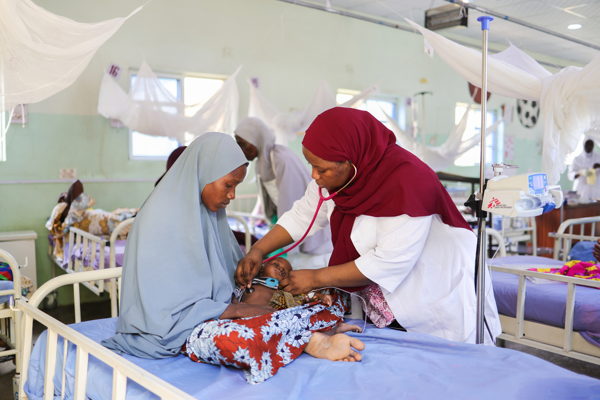
Women in Darfur, Sudan, are demanding protection, care and justice as sexual violence continues across the region, both in active conflict areas and far beyond frontlines, according to a new report released today by Doctors Without Borders (MSF).
The report, “There is something I want to tell you…”Surviving the Sexual Violence Crisis in Darfur provides the most comprehensive documented accounts of sexual violence in Sudan’s war, with survivors' testimonies and data from MSF medical programmes highlighting clear patterns of widespread and systematic abuse.

Between January 2024 and November 2025, at least 3,396 survivors of sexual violence sought treatment in MSF-supported facilities across North and South Darfur, though MSF warns this represents only a fraction of the true scale, as many survivors cannot safely reach care. Women and girls accounted for 97% of survivors treated in MSF programmes.
“Sexual violence is a defining feature of this conflict — not confined to frontlines, but pervasive across communities,” said Ruth Kauffman, MSF, Emergency Health Manager. “This war is being fought on the backs and bodies of women and girls. Displacement, collapsing community support systems, lack of access to healthcare and deep-rooted gender inequalities are allowing these abuses to continue across Sudan.”

Survivor testimonies and MSF medical data show that RSF soldiers and allied militias are responsible for widespread and systematic sexual violence against women.
Following the RSF’s capture of El Fasher — the capital of North Darfur — on 26 October 2025, MSF treated more than 140 survivors fleeing the city to Tawila in November, 94% of whom were attacked by armed men with many reporting assaults along escape routes. The assaults were widespread, often carried out by multiple perpetrators in front of family, and deliberately targeted non-Arab communities, as a means of humiliation and terror, echoing previous RSF atrocities such as the dismantling of Zamzam camp.

In just one month, between December 2025 and January 2026, MSF identified a further 732 survivors in displacement camps around Tawila, where women reported attacks both during their journeys and within the camps. Overcrowded shelters, lack of basic security, and unsafe conditions — including distant water points, insecure bathing areas and limited latrines — further increased their vulnerability.
Survivors described attacks not only during fighting, but in everyday settings — on roads used to flee violence, in fields where families grow food, and in markets and displacement camps — showing how sexual violence extends far beyond the frontlines.
In South Darfur, hundreds of kilometres from active ground fighting, 34% of survivors were assaulted while farming or travelling to farmland, and 22% while collecting firewood, water or food, highlighting how violence occurs during everyday activities.
Children are also among the survivors: in South Darfur, one in five survivors was under 18, including 41 children younger than five.

MSF data also points to patterns of systematic abuse, with armed men responsible for most assaults — over 95% in North Darfur, while nearly 60% in South Darfur involved multiple perpetrators.
One survivor described the violence she experienced while fleeing her home:
“They took us to an open area. The first man raped me twice, the second once, the third four times. Apart from the rapes, they beat us with sticks and pointed guns at my head.”
For many, the threat of violence has become part of daily life:
“Every day when people go to the market, there are cases of rape. When we go to the farm, this happens,” said a 40-year-old woman in South Darfur.
Survivors also face significant barriers to care — including insecurity, stigma and limited protection services. Sexual violence is being used as a weapon of war and a systematic means of controlling civilians, in violation of international humanitarian law, MSF said.
Community leaders, midwives, activists and survivors in focus groups MSF organised called for an immediate end to sexual violence across Sudan, demanding protection, access to care and dignity — alongside justice and accountability.
MSF calls on all parties to the conflict — including the RSF and their supporters — to cease and prevent sexual violence and hold perpetrators accountable. MSF also calls on the United Nations, donors and humanitarian actors to urgently scale up health and protection services in Darfur and all of Sudan.
Learn more about our activities in Sudan


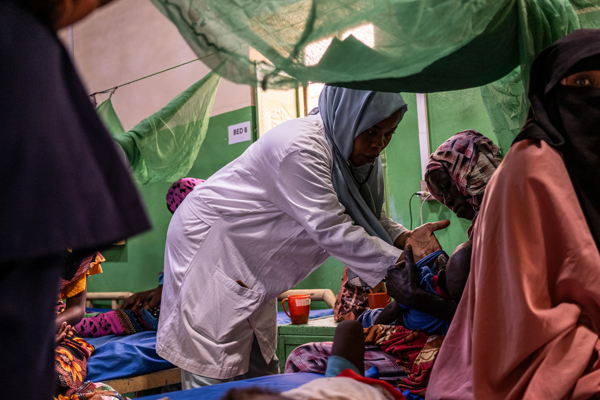
 A woman walks through Daba Naira camp for internally displaced people in Tawila, North Darfur, Sudan. For women and girls in Darfur, everyday movements—from markets to displacement routes—carry high risk of sexual violence. Between Photographer: Cindy Gonzalez |Date: 14/02/2026 |Location: Sudan
 Displacement in and around Tawila. Photographer: Jérôme Tubiana | Date: 20/04/2025 |Location: Sudan
MSF_Darfur_SGBV_PRINT.pdf
PDF 37 MB
PRESS RELEASE_Sudan SV Report.docx
DOCX 31 KB
Jane Rabothata
About Doctors Without Borders (MSF)
Doctors Without Borders (MSF) is a global network of principled medical and other professionals who specialise in medical humanitarian work, driven by our common humanity and guided by medical ethics. We strive to bring emergency medical care to people caught in conflicts, crises, and disasters in more than 70 countries worldwide.
In South Africa, we currently run a non-communicable diseases (NCDs) project in Butterworth, Eastern Cape province, where we support the Department of Health (DoH) in improving care for patients with diabetes and hypertension. The project focuses on improving screening, diagnosis, management, and prevention of NCDs through advocacy, research, health promotion, training, and mentorship of Community Healthcare Workers.
MSF is also recognised as one of the pioneers in providing antiretroviral treatment (ART) in the public sector. It started the first HIV programme in South Africa in 1999. The organisation's earlier interventions in the country have primarily been on developing new testing and treatment strategies for HIV/AIDS and Tuberculosis (TB) in Eshowe (Kwa-Zulu Natal) and Khayelitsha (Western Cape). The Eshowe project was handed over to DoH in 2023 after 12 years of operations. The Khayelitsha project was closed in 2020 after 22 years of activities and campaigning for improved HIV and TB treatment.
Other projects we have been involved in include our Migrant Project in the country's capital, Tshwane, which was handed over to authorities and a local Community-Based Organisation after building the capacity to work with undocumented populations. We also previously offered free, high-quality, and confidential medical care to survivors of sexual and gender-based violence in Rustenburg, North West province.
To learn more about our work in South Africa, please visit this page on our website (www.msf.org.za). To support MSF’s work:
- SMS “JOIN” to 42110 to donate R30 Once-off
- Visit https://www.msf.org.za/donate