SOUTH AFRICA: As time runs out to break ‘TRIPS Waiver’ stalemate, protesters at US & EU embassies in South Africa warn “The whole world is watching you.”
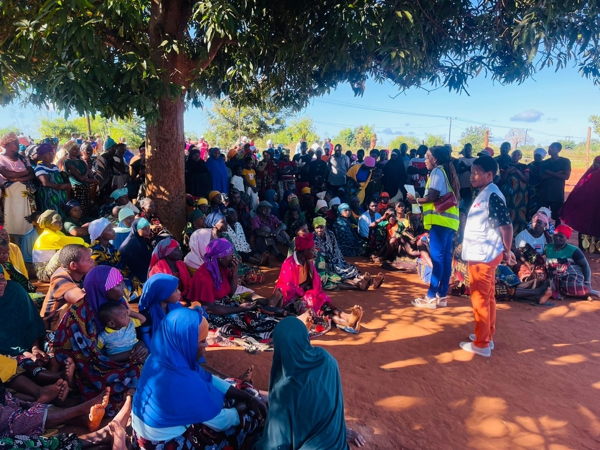
South Africa/Geneva, 12 October 2021 – As governments prepare to discuss the ‘TRIPS Waiver’ at the World Trade Organization (WTO) this week, Doctors Without Borders (MSF), along with treatment activists and civil society organisations, protested today outside the embassies of Belgium, the Netherlands and the US in Tshwane, the executive capital of South Africa, calling on these governments to break the impasse and fast-track the negotiations on the TRIPS Waiver so it is adopted at the upcoming WTO Ministerial Conference at the end of November. The groups also urged the US to play a more proactive role in steering the negotiations to reach a consensus and swift agreement, following the government’s statement of support for the TRIPS Waiver in early May.
“We have gathered outside the embassies of Belgium and the Netherlands to relay a clear message to EU countries to stop stonewalling on this critical waiver and stop putting multinational pharmaceutical corporation profiteering over human lives,” said Candice Sehoma, South Africa Advocacy Officer for MSF’s Access Campaign. “Even though France, Greece, Italy and Spain have already come out to support the waiver, another handful of governments in the EU with strong pharmaceutical corporation ties is choosing to put shareholder interests over the lives of people across the globe. We are calling on supportive EU countries to show real leadership and convince their neighbors to do the right thing so that the EU as a whole finally gets in line and supports the TRIPS Waiver.”
The landmark TRIPS Waiver proposal was originally put forward by India and South Africa one year ago, and is now officially backed by 64 sponsoring governments, with more than 100 countries supporting overall. It offers an expeditious option to overcome the legal barriers during the pandemic and could pave the way for diversified supply and production, so that more affordable and sustainable access can be guaranteed. However, despite dozens of statements by supporting governments emphasising the Waiver’s urgency and importance, the proposal has been effectively stalled by a small number of opposing governments, including the European Union (primarily Belgium, Denmark, Finland, Germany, Ireland, the Netherlands and Sweden), plus Norway, Switzerland and the UK.
“The US made a big, bold decision to support this groundbreaking TRIPS Waiver, but is now largely absent from the global effort to make it a reality,” said Avril Benoît, executive director of MSF-USA. "This is a historic opportunity, and the US must play a leadership role. While the US now has plenty of tools to tackle COVID-19, people in many low- and middle-income countries are still suffering and dying without vaccines, tests, or treatments. We don’t have time to waste. The US must deliver on its promise and ensure that the TRIPS Waiver is adopted.”
The world continues to witness global inequity in access to COVID-19 medical tools with high-income countries stockpiling and hoarding treatments and vaccines instead of allowing the fair distribution needed to end this pandemic. The US recently reserved 1.7 million treatment of the promising COVID-19 treatment molnupiravir, which, if approved, could be critical for reducing hospitalizations and deaths. The molnupiravir case illustrates why the TRIPS Waiver is so desperately needed: While the US government funded the development of the medicine by Emory University, pharmaceutical corporations Ridgeback and Merck obtained the licensing and rights for the medicine. Instead of offering licenses widely to all competent manufacturers in different countries, a voluntary license signed in April 2021 only includes Indian generic companies andhinders countries like Brazil from being able to produce and import the API (raw material) and generic versions.
“We have been saying from the start of this pandemic that governments cannot rely on voluntary measures by pharmaceutical corporations, and the molnupiravir example is a case in point,” said Felipe Carvalho, MSF Access Campaign Coordinator in Brazil. “We cannot welcome a voluntary license from Merck that deliberately blocks many middle-income countries from producing and supplying this drug on their own. It is crystal clear that unless legal tools like the TRIPS Waiver are adopted, many countries will continue to be at the mercy of patent-holding corporations that have the say over who gets to produce, who gets to buy, and at what price, while health ministries are already reeling from the rising costs of tackling COVID-19. We say to the remaining blocking governments: the eyes of the world are really just on you now – so you should think about what side of history you want to be on when the books on this pandemic are written.”
Editor’s Note:
On achieving global COVID-19 vaccine access
In addition to supporting the TRIPS Waiver proposal, MSF calls on governments to use all legal and policy tools to facilitate uninterrupted production and diversity in supply of COVID-19 medical tools, including the full use of existing TRIPS flexibilities for public health safeguarding. MSF also urges all governments with sufficient COVID-19 vaccine doses to immediately redistribute excess doses to the COVAX Facility or regional bodies. MSF urges the US and German governments to pressure Pfizer-BioNTech and Moderna to share mRNA vaccine technology and know-how with manufacturers in low- and middle-income countries, and for all governments to support the WHO COVID-19 mRNA Vaccine Technology Transfer Hub with financial and political support.
.jpg)
%20(1).jpg)