Northeast Nigeria: “I feel ashamed of relying on others to live, but we can’t go home”
Dr Silas Adamou-Moussa, MSF’s deputy programme manager for Nigeria, describes the situation in Borno State, where displaced people are stranded in enclaves, struggling to survive.
Nigeria
“I’m currently in Borno State in northern Nigeria. In our hospital in Ngala, I met Yakura Fatama, a mother of six, who had left her home and walked for two days to seek safety in Ngala. ‘I don’t have a house, I don’t have food and I don’t have anything to cook with or carry water in,’ she told me. ‘I feel ashamed of relying on others to live, but we can’t go home. If we do, we will all get our throats slit, even the little ones.’
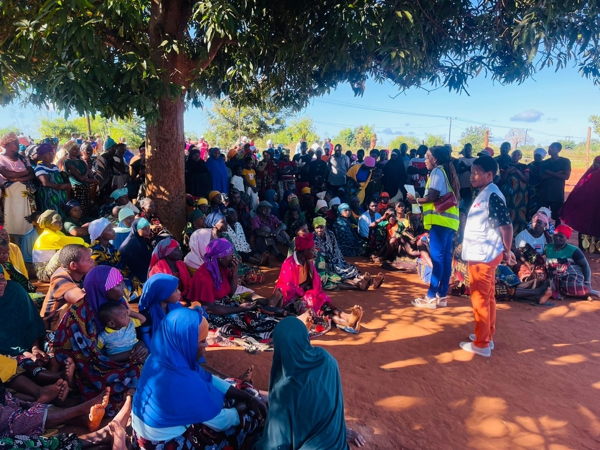
Here in Borno State, I met many MSF patients who, like Yakura, had been forced to leave their homes because of violence. They told me about their struggle to survive and their wish to get back their lives and earn a living to support their families. They rely on aid, but they only receive the bare minimum. Many have sought shelter in military-controlled camps where their freedom of movement is very restricted. Yet they are forced to stay because it is not safe to return home.
The humanitarian needs are still massive in the remote areas of Borno, and I despaired to see how little aid actually reaches those who need it most. While aid agencies have scaled up activities, people’s needs are still not being met. Many humanitarian organisations do not have permanent teams with experienced, senior staff in the remote enclaves, and this hampers the effectiveness of the humanitarian response.
The volatile security situation and the remoteness of the locations also pose a major challenge to bringing in aid. We have to weigh up the security risk to our teams and balance this against people’s needs. And we can only go where the military allows us to go. We don’t know what is happening outside these areas and if people there have any medical needs. A small but steady number of people keep arriving from these places every week.
The remote town of Rann, for example, was virtually cut off from the outside world throughout the rainy season when the roads leading there disappeared under water. No food or aid supplies could be brought in during this time, leaving 40,000 people without assistance for months.
During the rainy season, we deployed mobile teams to Rann to provide preventive malaria treatment to children under five, as malaria is the main killer during this period. Since September, we have had a permanent medical team there. We mainly treat patients for illnesses linked to poor living conditions and lack of clean water. Many people saw their shelters flooded during the rains and the most common illnesses were respiratory infections and diarrhoea. An outbreak of hepatitis E has been unfolding in Rann since August. While malnutrition has somewhat stabilised, we continue to treat many children.
Sadly, we are seeing similar worrying situations in several locations where we work in Borno. People are stranded and in need of assistance. It is hard to see how their situation will improve in the near future.”