Nigeria: MSF hands over Cross River project after three years of lifesaving care
In September 2025, Doctors Without Borders (MSF) concluded its Cross River project after three years of collaboration with the state ministry of health, providing free, comprehensive health care to thousands of people living in Akor and Old Ndibeji, located in the Akampa Local Government Area near the Nigerian-Cameroonian border. Launched in May 2022, the project supported two primary health care centres in communities whose access to medical services had been extremely limited. After donating medical supplies, MSF handed over operations to the Ministry of Health.
For many community members like Achifone Felix, MSF’s presence was the difference between life and death. “MSF has helped me survive. I am a patient with high blood pressure, and when I came here during my retirement, MSF attended to me and provided free medication. Without their support, many of us would not be alive today.”

During its three-year presence, MSF became a lifeline for remote communities. Working alongside the incentivised MoH staff, the MSF teams conducted more than 73,000 outpatient consultations, admitted over 8,000 patients for observation before referring them for further treatment in Calabar, and supported 2,123 deliveries. They also provided 3,887 antenatal consultations, 5,776 family planning sessions, and administered 9,303 vaccinations. Malaria, endemic in the region, was the leading cause of illness among the patients MSF cared for, with nearly 30,000 cases treated. People also received care for other common conditions included injuries, respiratory infections and typhoid fever.
Beyond patient care, MSF also provided training for local staff as an investment in the sustainability of healthcare services in this part of Cross River. Owen Helen, a Ministry of Health nurse working with MSF explained: “When I finished school, I had no experience in patient consultation. But after joining MSF, and spending three years with them, I gained the skills to manage patients confidently. Now I know how to consult, perform procedures like circumcision, and provide family planning services — all of which I learned while working with MSF. Today, I can carry out these tasks independently and effectively.”

The facilities offered basic emergency obstetric and newborn care, ensuring essential and safe care for pregnant women, mothers, and newborns during childbirth. On average, MSF teams managed 54 deliveries each month and referred between 20 and 40 women with pregnancy complications to tertiary hospitals in Calabar, the state capital. During the rainy season, this journey took roughly eight to ten – sometimes up to 12 – hours to travel. Other times, the road would be washed out completely, delaying transport further. Referrals were mostly for paediatric cases, complicated sexual and reproductive health issues, severe malaria, injuries, and surgical complications. MSF covered all costs for referred patients, including medical bills, transport, and food.
“My uncle fell seriously ill in the middle of the night, and we rushed him to the MSF facility here in Old Ndibeji. The nurses worked tirelessly to stabilise him, and by morning, he was already better. He was admitted free of charge, and the medicines were also free. Later, they arranged to transfer (refer) him to the Teaching Hospital in Calabar.” — Alhaji Abdulwahab Achigi, resident of Old Ndibeji
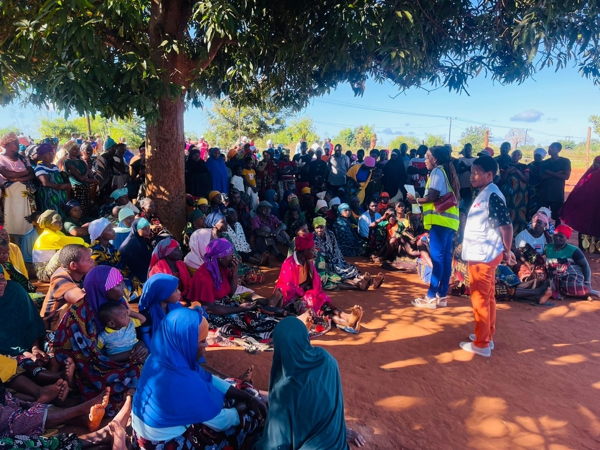
The project adopted a community health model, reaching 17 communities through house-to-house health promotion, a referral system to higher-level care and follow-up care in the community. This approach helped bridge gaps in health awareness and encouraged timely care-seeking.
Operating in these remote communities posed significant challenges, from long distances to seasonal disruptions to the roads, hindering medical transfers. Despite these obstacles, MSF ensured free, quality care and lifesaving support for thousands of people who otherwise had little access to health services.
Meria Nadje, MSF Project Coordinator, reflected on the impact: “When we started in 2022, the need was overwhelming. People had to travel for hours to get basic care. Today, looking back at the thousands of consultations, deliveries, and lives saved, it’s clear this project made a real difference.”

Doctors Without Borders/Médecins Sans Frontières (MSF) provides medical care to people in need in Nigeria and more than 75 other countries. The organisation’s work is guided by medical ethics and the principles of impartiality, independence and neutrality. Almost all of MSF’s funding comes from private donors, allowing the organisation to maintain its independence. MSF has worked continuously in Nigeria since 1996 and currently provides free healthcare in eight states across the country.

 MSF Midwife supervisor, Queenete, administers fluid to a patient at the primary healthcare supported by MSF at Akor community in Akamkpa local government area of Cross River state. Photographer: Abba Adamu Musa | Date: 23/04/2024 | Location: Nigeria
 MSF van crossing a wooden bridge, a short distance away from a primary healthcare facility MSF is supporting. The wooden bridge was constructed after the concrete bridge collapsed. It is now old too, so, MSF van crosses without passengers to reduce weight. Photographer: Abba Adamu Musa | Date: 19/04/2024 | Location: Nigeria
MSF Hands Over Cross River Project After Three Years of Lifesaving Care_AK_EN-edit (002).docx
DOCX 35 KB
Jane Rabothata
About Doctors Without Borders (MSF)
Doctors Without Borders (MSF) is a global network of principled medical and other professionals who specialise in medical humanitarian work, driven by our common humanity and guided by medical ethics. We strive to bring emergency medical care to people caught in conflicts, crises, and disasters in more than 70 countries worldwide.
In South Africa, we currently run a non-communicable diseases (NCDs) project in Butterworth, Eastern Cape province, where we support the Department of Health (DoH) in improving care for patients with diabetes and hypertension. The project focuses on improving screening, diagnosis, management, and prevention of NCDs through advocacy, research, health promotion, training, and mentorship of Community Healthcare Workers.
MSF is also recognised as one of the pioneers in providing antiretroviral treatment (ART) in the public sector. It started the first HIV programme in South Africa in 1999. The organisation's earlier interventions in the country have primarily been on developing new testing and treatment strategies for HIV/AIDS and Tuberculosis (TB) in Eshowe (Kwa-Zulu Natal) and Khayelitsha (Western Cape). The Eshowe project was handed over to DoH in 2023 after 12 years of operations. The Khayelitsha project was closed in 2020 after 22 years of activities and campaigning for improved HIV and TB treatment.
Other projects we have been involved in include our Migrant Project in the country's capital, Tshwane, which was handed over to authorities and a local Community-Based Organisation after building the capacity to work with undocumented populations. We also previously offered free, high-quality, and confidential medical care to survivors of sexual and gender-based violence in Rustenburg, North West province.
To learn more about our work in South Africa, please visit this page on our website (www.msf.org.za). To support MSF’s work:
- SMS “JOIN” to 42110 to donate R30 Once-off
- Visit https://www.msf.org.za/donate