MSF demands sustained investments and political will to end the neglect of children with tuberculosis
1.2 million children have TB worldwide, but nearly half miss diagnosis and treatment
This World Tuberculosis (TB) Day, Doctors Without Borders (MSF) urges governments and international donors to bring children to the heart of the global TB response and commit to providing sustained investments to diagnose, treat, and prevent TB in children, who remain one of the most vulnerable groups. No child should suffer or die from a disease that is both preventable and treatable.
“In an already underfunded TB response, children are pushed further to the back of the line when services are disrupted by aid cuts, conflict, or displacement”, said Cathy Hewison, TB platform lead, MSF. “The tools to diagnose and treat children with TB exist, even if imperfect, yet only half of the children who have TB are diagnosed or treated. For a truly global TB response, children cannot remain an afterthought and must be prioritised now.”
As per the World Health Organization (WHO)’s 2025 Global TB Report, 1.2 million children and young adolescents aged less than 15 years old fell ill with TB in 2024. The Report also revealed that a staggering 43 per cent of children under 15 years old missed TB diagnosis and could not access treatment in 2024*, a statistic that has not improved from previous years. The situation is worse for children with TB below 5 years old, with only half of them accessing TB diagnosis and care. The volatile combination of interruptions in TB services as a result of recent cuts in international financing of TB programmes and a record number of displaced people in TB high-burden countries is expected to result in even more children remaining undiagnosed and untreated.
Despite this grim reality, we can get closer to reaching the children who are missing out on TB diagnosis and treatment by effectively implementing the WHO guidelines. For instance, an efficient way to diagnose TB in children under 10 years old is by using the WHO-recommended treatment decision algorithms – these are guided scoring systems that allow healthcare workers to diagnose TB based on clinical symptoms alone (in combination with an X-ray, if available), or when laboratory tests are unavailable or appear negative. Based on recent MSF research conducted in 5 African countries (Guinea, Niger, Nigeria, South Sudan, and Uganda), the use of the WHO algorithms can nearly double the number of children who can be diagnosed with TB and subsequently started on lifesaving treatment.
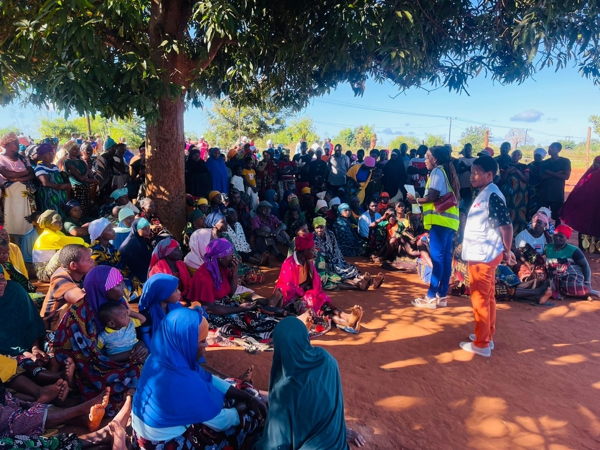
MSF teams frequently see children with TB whose treatment is delayed due to no or inappropriate diagnosis approaches, or because physicians simply don’t think of TB. In Mozambique, Francisco, a 11-year-old boy, began showing signs of TB in July 2024, yet his symptoms were overlooked for months. It was only in March 2025 that he finally started appropriate TB treatment, long after the first warning signs.

“At first, I noticed that my child was weak and had no appetite,” said Fernando Jorge Anasomia, father of Francisco, Mueda, Mozambique. “Initially, they [doctors] didn't do any tests. When tests were [finally] done, nothing showed up. They told us that the child had no disease. When we went to the hospital for the second time and had the tests done again, that’s when they told us that the child had drug-resistant TB. It took a long time to start the treatment even though he started to feel ill eight months ago.”
Implementation of the WHO algorithms in routine care in MSF-supported health facilities is showing a significant increase in the number of children diagnosed with TB.
“The impact of implementing the WHO treatment decision algorithms in Niger has been a catalyst for hope,” said Dr Moussa Mamane Oumarou Farouk, TB focal point for MSF in Niger. “In 2024 and 2025, nearly half of all the children under 5 years of age who were diagnosed with TB in the country were in the 5 districts where MSF supports the implementation of the algorithms. Considering there are a total of 72 districts in Niger, scaling up these approaches across the country, together with the Ministry of Public Health and Hygiene, could significantly close the gap in diagnosing TB in children and prevent more avoidable deaths.”
Every missed sign and every delayed decision push children with TB closer to severe disease and death. Greater political will and investments from governments and international donors are urgently needed to ensure lifesaving tools for preventing, diagnosing, and treating TB are available to all children.
MSF has been providing tuberculosis (TB) care for 30 years, working alongside national health authorities to treat people in a wide variety of settings, including conflict zones, impoverished urban communities, prisons, refugee camps, and rural areas. In 2024, MSF treated 25,000 people with TB, including 1500 patients with drug-resistant TB, in over 35 countries, with most patients being in Africa (68 per cent) and Asia (30 per cent).
MSF is presently running the Test, Avoid, and Cure TB in Children (TACTiC) project aiming to innovate TB care for children by implementing the latest WHO recommendations and generating evidence on their effectiveness, feasibility, and acceptability, and advocating for their implementation at global and national levels. The project covers 12 countries with a high burden of TB and where MSF provides TB care for children: Afghanistan, Central African Republic, Democratic Republic of Congo, Guinea, Mozambique, Niger, Nigeria, Pakistan, the Philippines, Somalia, South Sudan, and Uganda.
*The WHO Global Tuberculosis Report highlights that in 2024, 685000 children under the age of 15 were reported with TB, out of an estimated 1.2 million who had TB.
Read more about TACTiCPR_World TB Day_final.docx
DOCX 42 KB
Jane Rabothata
About Doctors Without Borders (MSF)
Doctors Without Borders (MSF) is a global network of principled medical and other professionals who specialise in medical humanitarian work, driven by our common humanity and guided by medical ethics. We strive to bring emergency medical care to people caught in conflicts, crises, and disasters in more than 70 countries worldwide.
In South Africa, we currently run a non-communicable diseases (NCDs) project in Butterworth, Eastern Cape province, where we support the Department of Health (DoH) in improving care for patients with diabetes and hypertension. The project focuses on improving screening, diagnosis, management, and prevention of NCDs through advocacy, research, health promotion, training, and mentorship of Community Healthcare Workers.
MSF is also recognised as one of the pioneers in providing antiretroviral treatment (ART) in the public sector. It started the first HIV programme in South Africa in 1999. The organisation's earlier interventions in the country have primarily been on developing new testing and treatment strategies for HIV/AIDS and Tuberculosis (TB) in Eshowe (Kwa-Zulu Natal) and Khayelitsha (Western Cape). The Eshowe project was handed over to DoH in 2023 after 12 years of operations. The Khayelitsha project was closed in 2020 after 22 years of activities and campaigning for improved HIV and TB treatment.
Other projects we have been involved in include our Migrant Project in the country's capital, Tshwane, which was handed over to authorities and a local Community-Based Organisation after building the capacity to work with undocumented populations. We also previously offered free, high-quality, and confidential medical care to survivors of sexual and gender-based violence in Rustenburg, North West province.
To learn more about our work in South Africa, please visit this page on our website (www.msf.org.za). To support MSF’s work:
- SMS “JOIN” to 42110 to donate R30 Once-off
- Visit https://www.msf.org.za/donate