Mozambique: Humanitarian Needs Remain High as MSF Wraps Up Mueda Project in Cabo Delgado
Between 2021 and 2025, Doctors Without Borders (MSF) provided medical care to displaced and host communities across Mueda, Nangade, and Muidumbe districts, in northern Mozambique’s Cabo Delgado province, following a flare-up of violence in the conflict that’s been ongoing since 2017. As Mueda, Nangade, and Muidumbe received a significant number of displaced people, MSF teams responded to medical and humanitarian needs and strengthened the local healthcare system. After four years, as healthcare services resumed functioning after the peak of the emergency, MSF has ended activities in the three districts, while warning that humanitarian needs in Cabo Delgado remain high.

In 2021, armed men linked to a group affiliated to Islamic State Mozambique launched an assault on the coastal town of Palma, around 100 kilometres northeast of Mueda. Civilian areas, hotels, and residential neighbourhoods were attacked, homes were torched, and residents fled into the surrounding bush. Many people were trapped, injured, or killed. The violence triggered one of the largest mass displacement of people since the conflict began, pushing thousands towards safer areas. MSF teams rapidly responded, providing emergency medical care to people in Palma and those arriving in displacement sites across Cabo Delgado.
As successive waves of violence hit Mocímboa da Praia, Macomia, Muidumbe, and other districts, Mueda became a refuge. The town absorbed tens of thousands of displaced people, some arriving in critical condition after days on the move. MSF teams launched mobile clinics, delivered emergency care, provided water and sanitation support in displacement sites, and offered mental health services to people coping with the trauma of sudden, repeated loss.
Shifting response to reinforcing the healthcare system
As the security situation across Cabo Delgado improved and some displaced people began returning home, we adapted our activities, shifting from emergency response to reinforcing existing health facilities. In Mueda Rural Hospital, MSF teams provided medical staff, supplies, and technical support to deliver emergency care, maternity services, paediatric and neonatal care, HIV/TB diagnosis and treatment, and referral services. In Nangade and Muidumbe, we worked in health centres serving displaced and host communities. Our teams also trained and reinforced networks of community health workers and health promoters, strengthening community-based health surveillance and improving continuity of care and early detection of health issues.

As the situation continued to stabilise and health facilities resumed functioning, from 2024, MSF began a phased handover to the Ministry of Health and local partners. Efforts focused on building clinical and pharmacy capacity among health staff. They were trained in emergency preparedness and surveillance systems, providing care for chronic diseases and mental health, and referrals for people who are victims of gender-based violence. We also donated stocks of essential medical supplies to support ongoing healthcare services.
However, late 2025 brought a stark reminder that the conflict remains volatile. New attacks by the armed group active in northern Mozambique, and clashes with local and regional forces, triggered fresh displacement of people across the region. More than 90,000 people fled between late September and the end of the year, with around 23,000 arriving in Mueda district alone by October. Many people had already been displaced multiple times, and some found themselves returning to the very camps they once left behind.
We scaled up our response once again. This new shift brought MSF teams to provide medical services in Eduardo Mondlane, Nandimba, and Lianda camps, while extending outreach to communities such as Nanili, at the border with Mocímboa da Praia district. We provided strengthened infection prevention and control measures and facilitated referrals for people requiring urgent care. Our teams also provided expanded mental health services to address people’s cumulative psychological toll of cyclical displacement and prolonged insecurity.

The latest crisis reveals yet again the fragility of health services in northern Mozambique and the continued challenges people face in accessing care. While MSF’s activities in Mueda have ended, we recognise that humanitarian needs remain high across Cabo Delgado. Access to healthcare continues to be limited for both displaced people and host communities, and the risk of sudden displacement persists wherever violence flares.
MSF remains committed to responding to evolving needs and to providing medical and humanitarian assistance to people across Mozambique.
MSF Mueda activities in figures:
- 258,000 outpatient consultations
- 62,083 people treated for malaria
- 56,334 people treated for respiratory infections
- 11,145 people treated for diarrhoeal diseases
- 20,369 inpatient consultations
- 32,933 medical referrals
- 12,268 assisted deliveries
- 7,675 sexual and reproductive health consultations
- 7,436 individual mental health consultations
- 208,300 attendances in group mental health activities
MSF continues to provide vital healthcare services to host communities and people coping with violence and displacement in northern Mozambique. In Cabo Delgado, MSF runs projects in Mocímboa da Praia, Macomia, and Palma. We provide general outpatient consultations, emergency care, maternity and paediatric services, treatment for HIV and tuberculosis, and mental health and psychosocial support. In Nampula, we are running an emergency intervention in Érati district and supporting the Ministry of Health in handling a cholera outbreak in Nacala.
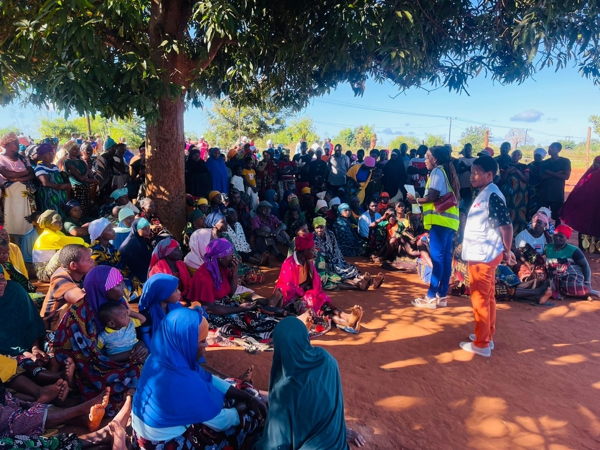
 Following attacks by non-state armed groups in the south of Chiure district on the night of July 23, an MSF team carried out an assessment of the medical and humanitarian needs at the new IDP transit camp in Chiure, Cabo Delgado, Mozambique. Photographer: MSF | Date: 29/07/2025 | Location: Mozambique
 Inmaculada, 48, from Muidumbe, works as a health promoter for MSF at the Mueda project, in the northern Mozambican province of Cabo Delgado. Photographer: Igor Barbero | Date: 10/12/2021 | Location: Mozambique
202602_MSF winds down operations in Mueda following transition to local health authorities_EN.docx
DOCX 28 KB
We-Saw-Fire-press-kit-EN.zip
ZIP 14 MB
Jane Rabothata
About Doctors Without Borders (MSF)
Doctors Without Borders (MSF) is a global network of principled medical and other professionals who specialise in medical humanitarian work, driven by our common humanity and guided by medical ethics. We strive to bring emergency medical care to people caught in conflicts, crises, and disasters in more than 70 countries worldwide.
In South Africa, we currently run a non-communicable diseases (NCDs) project in Butterworth, Eastern Cape province, where we support the Department of Health (DoH) in improving care for patients with diabetes and hypertension. The project focuses on improving screening, diagnosis, management, and prevention of NCDs through advocacy, research, health promotion, training, and mentorship of Community Healthcare Workers.
MSF is also recognised as one of the pioneers in providing antiretroviral treatment (ART) in the public sector. It started the first HIV programme in South Africa in 1999. The organisation's earlier interventions in the country have primarily been on developing new testing and treatment strategies for HIV/AIDS and Tuberculosis (TB) in Eshowe (Kwa-Zulu Natal) and Khayelitsha (Western Cape). The Eshowe project was handed over to DoH in 2023 after 12 years of operations. The Khayelitsha project was closed in 2020 after 22 years of activities and campaigning for improved HIV and TB treatment.
Other projects we have been involved in include our Migrant Project in the country's capital, Tshwane, which was handed over to authorities and a local Community-Based Organisation after building the capacity to work with undocumented populations. We also previously offered free, high-quality, and confidential medical care to survivors of sexual and gender-based violence in Rustenburg, North West province.
To learn more about our work in South Africa, please visit this page on our website (www.msf.org.za). To support MSF’s work:
- SMS “JOIN” to 42110 to donate R30 Once-off
- Visit https://www.msf.org.za/donate