ETHIOPIA: MSF URGES INVESTIGATION INTO STAFF KILLINGS AND CALLS FOR AID TEAMS TO BE ALLOWED TO WORK IN SAFETY

Following the brutal murder of three of its staff in the Ethiopian region of Tigray on 24 June, Doctors Without Borders (MSF) calls for an immediate investigation into the killings and insists that aid workers are allowed to do their jobs in safety. In response to the killings, MSF announces the suspension of its activities in Abi Adi, Adigrat and Axum, in central and eastern Tigray. MSF teams in other areas of Tigray will continue cautiously to provide assistance to people in urgent need.
“Almost two weeks since the murders of our colleagues, no one has claimed responsibility and the circumstances around their deaths remain unclear,” says MSF operations director Teresa Sancristoval. “This is why we are requesting an immediate investigation by relevant parties to establish the facts of the incident that resulted in their deaths and to provide us with a detailed account of what happened and who was responsible. At this terrible time, we have made the extremely painful but necessary decision to suspend our activities in several areas of Tigray.”
The three MSF team members who were killed were wearing clothing that identified them as MSF and travelling in a clearly marked MSF vehicle. They had been working in the area since February 2021, where they were engaged exclusively in medical and humanitarian activities, in alignment with international humanitarian law and in dialogue and agreement with all parties.
“The murder of our colleagues - María, Tedros and Yohannes - is a tragic example of the complete disregard for human life that our teams have witnessed in this conflict,” says Sancristoval. “The levels of violence against civilians and the atrocities committed in Tigray are utterly shocking.”
Since the conflict in Tigray began in November 2020, medical staff and aid workers have been directly targeted, while health facilities and ambulances have been looted, destroyed or exploited for military purposes. MSF staff have been threatened and beaten, and have witnessed armed incursions into health facilities supported by MSF. Aid organisations, including MSF, have been repeatedly undermined by public statements casting unwarranted suspicion on their activities, thereby jeopardising the safety of their teams on the ground.
If MSF and other aid organisations are to continue working in Tigray and the rest of Ethiopia, all parties to the conflict must provide assurances that this work can be carried out in safety, says Sancristoval.
“Parties to the conflict must take responsibility for ensuring that an incident like the murder of our colleagues never happens again,” she says. “It is vital that aid workers and medical staff can safely carry out their activities in an environment of trust and facilitation. Humanitarian organisations must be allowed to provide assistance, independently and impartially, according to people’s needs.”
The suspension of MSF activities in Abi Adi, Adigrat and Axum will have major medical and humanitarian repercussions for the population of central Tigray. Over the past six months, MSF teams in these three areas have provided emergency medical treatment to 9,440 people; performed 763 lifesaving surgeries; admitted more than 3,000 people for inpatient care; helped more than 3,300 women give birth; performed 365 emergency caesareans; provided medical care for 335 survivors of sexual violence; and provided mental health support to 1,444 people. Before suspending its activities, MSF teams donated medical supplies to the Regional Health Bureau and to hospitals, which remain overwhelmed by the high numbers of patients needing care.
“The decision to suspend our activities will leave a gap in lifesaving assistance,” says Sancristoval. “We know that countless patients will go unattended and some of them will die; we know that the burden on what little remains of the health system will be crushing. Our teams must be allowed to provide humanitarian assistance in response to the needs of crisis-affected communities in safety.”
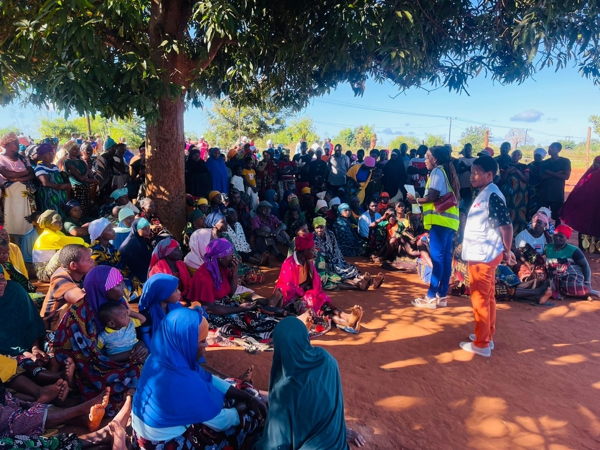
 MSF translator Tedros gives instructions to women waiting with their children for a medical consultation at a mobile clinic in the village of Adiftaw, in the northern Ethiopian region of Tigray. Photographer: Igor Barbero/MSF
 MSF translator Tedros asks people to line up to wait for medical consultations at a mobile clinic in the village of Adiftaw, in the northern Ethiopian region of Tigray. Photographer: Igor Barbero/MSF