DRC: MSF responds to the escalating conflict in Goma
In recent weeks, the armed conflict in the DRC between the M23/AFC and the Congolese army, backed by their allies, has flared up again in the province of North Kivu and spread to the neighbouring province of South Kivu. Emmanuel Lampaert, MSF's representative in the Democratic Republic of Congo (DRC), provides an update on the situation and MSF's response.
What is the current situation in the Kivus with regard to the conflict in DRC?
Since December 2024, several fronts have been opened in the two provinces to control certain key positions. In Lubero territory, in North Kivu, the conflict resumed in December with massive population displacement. It continued in Masisi territory, where intense fighting took place in January 2025, particularly for control of the town of Masisi Centre, before moving down towards South Kivu to Minova and Numbi in Kalehe territory.
During the hostilities, the M23/AFC managed to take control of several towns. Recently, the fighting has moved closer to the provincial capital of Goma, with intense clashes in Sake, just 20 kilometres from the city. Artillery explosions can be heard regularly from Goma. Fighting is taking place on all the roads around Goma and has led to a new influx of displaced people into the city, including from some camps on the outskirts of the city, where people flee towards Goma in a situation of panic.

How is this situation affecting the population?
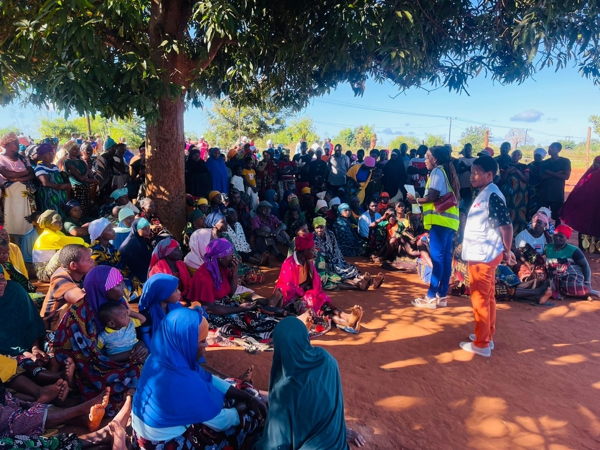
Unsurprisingly, the humanitarian consequences for the population are very serious. Hundreds of thousands of people have once again fled the fighting because of the conflict in the DRC. According to the United Nations, 400,000 people have already fled since January. Tens of thousands headed for displacement sites around Goma, where more than 650,000 people were already living, exhausted by almost three years of fighting. The clashes in recent weeks have led to a new influx of people into these completely unhygienic sites, whereas we have been saying for far too long – families are surviving without proper shelter and lacking everything: food, water, health care, etc.
Unfortunately, these sites are not spared from the fighting. Rockets are being fired near these camps or the health facilities where people have sought shelter. It's appalling and unacceptable. We are also seeing a very worrying proportion of civilians among the hundreds of wounded we are helping to treat. Some are victims of stray bullets, but others are victims of the warring parties' failure to respect certain basic rules of conflict.
In Masisi, the hospital we support came under fire while more than 10,000 people were seeking shelter. Two people were hit just outside the hospital, and two of our staff were injured by rocket fire. The presence of combatants or artillery positions near health facilities and camps for internally displaced people puts lives at immediate risk. It is crucial for everyone to remember that even war has its rules.

What is MSF's current response on the ground?
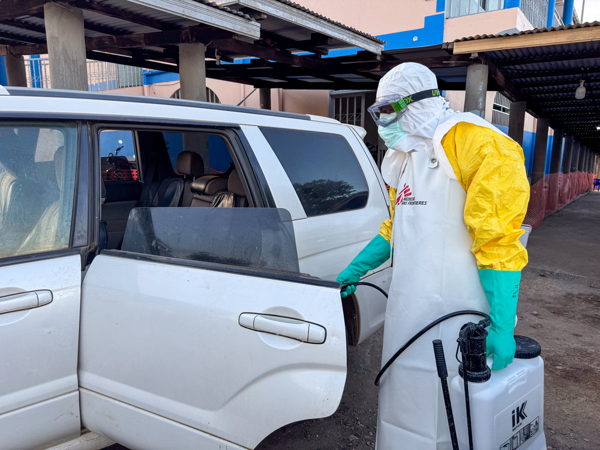
We are doing our utmost to maintain our regular and emergency activities, but in some areas, we have had to limit the risks by reducing the size of our teams. Around Goma, for example, direct armed violence has reduced our ability to go to certain affected sites over the past two days. However, we continue to supply medical facilities, help them prepare for an influx of wounded, and bring in fuel to run water pumps as soon as conditions allow. This allows these facilities to continue to function, even with a more limited presence of our teams.
In Goma itself, we continue to support the Kyeshero Hospital in treating some of the wounded and relieving the International Committee of the Red Cross (ICRC), which is on the front line treating the wounded at the Ndosho hospital. It is clear that the hospitals in Goma are completely overwhelmed by the number of wounded.
In the rest of North and South Kivu, despite the security, logistical challenges, and restrictions on movement, we are maintaining our presence and continuing to treat patients, including the wounded. In three weeks, nearly 400 casualties have been treated at the Minova General Referral Hospital, the Numbi Hospital Centre and the Masisi General Referral Hospital. As the conflict in the DRC continues, We are also continuing to support displaced people in more remote areas, such as Lubero, where we are also working to improve access to water in health facilities and at the Magasin site for displaced people.


DRC Crisis Questions.docx
DOCX 24 KB
Read more about our activities in DRC
About Doctors Without Borders (MSF)
Doctors Without Borders (MSF) is a global network of principled medical and other professionals who specialise in medical humanitarian work, driven by our common humanity and guided by medical ethics. We strive to bring emergency medical care to people caught in conflicts, crises, and disasters in more than 70 countries worldwide.
In South Africa, the organisation is recognised as one of the pioneers of providing Antiretroviral Treatment (ART) in the public sector and started the first HIV programmes in South Africa in 1999. Until today, the focus of MSF’s interventions in the country has primarily been on developing new testing and treatment strategies for HIV/AIDS and TB in Eshowe (Kwa-Zulu Natal) and Khayelitsha (Western Cape).
In Tshwane, we run a migration project, and we offer medical and psychosocial care to migrants, refugees, and asylum seekers, who struggle to access public health services under South Africa’s increasingly restrictive.
Previously we offered free, high-quality, confidential medical care to survivors of SGBV in Rustenburg.
To learn more about our work in South Africa, please visit this page on our website (www.msf.org.za). To support MSF’s work:
- SMS “JOIN” to 42110 to donate R30 Once-off
- Visit https://www.msf.org.za/donate