DRC: Cholera cases drop 90% in Sange
After eight weeks of emergency intervention by Doctors Without Borders (MSF) in Sangé in the province of South Kivu, in the eastern Democratic Republic of Congo (DRC), the number of cholera cases haves fallen by 90%. The epidemic – the most serious in the area in five years – is driven by limited access to water collection points and a fragile health system. It has also been exacerbated by the mass displacements of people fleeing the ongoing clashes between the Congolese army, allied with the Wazalendo, and the AFC/M23.
“In the middle of the night, I had excruciating stomach pains followed by vomiting and diarrhoea. When I saw that my condition was getting worse, I alerted my neighbours, who helped me pay for a motorcycle to take me here to the hospital,” says Tanishaka, a 48-year-old farmer, and one of over 800 people infected with cholera and being treated by MSF in Sangé.

In this town, households have been without drinking water for several months. This is because the two main water collection points are not functioning properly and have become inaccessible. “Due to the presence of armed groups, it was impossible for people to access water collection points, whose filtration systems were clogged with sand and dirt. People were deprived of safe drinking water,” explains Mamadu Diallo, MSF medical team leader.
Most residents were left with no other choice than to drink unsafe water from the river or irrigation canal, as explained by Busime, the mother of three-year-old Gisele, who is suffering from cholera and being treated at Sangé General Hospital. “It's dirty water that hasn't been treated, but because of the water shortage, we drink it because we have no other choice. My daughter became completely dehydrated. She stayed in bed and couldn't even get up after going to the toilet,” she says.

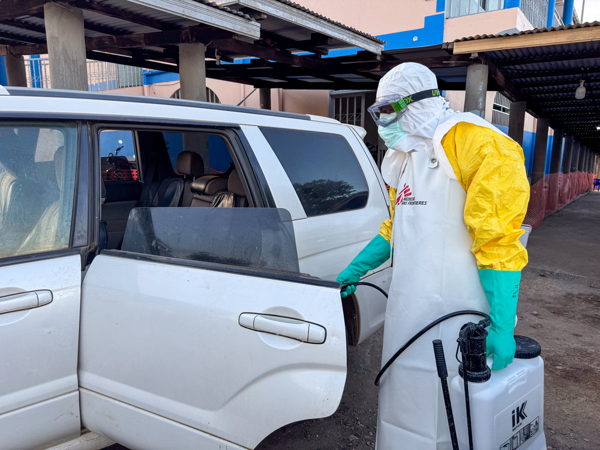
In response to the epidemic, MSF is supporting the cholera treatment centre at Sangé General Hospital and the Ndunda Health Centre on the outskirts of the city. In total, MSF has set up more than 50 water chlorination points in the Ruzizi health zone.
MSF is working with the community to help clean up water collection points. Eventually, the water will be filtered and chlorinated again. “Free access to drinking water collection points is the major problem in the area, and this is what needs to be addressed as a priority,” explains Edwige Baluga, MSF medical coordinator.
After eight weeks of MSF teams responding to the emergency, the number of cholera cases have fallen by 90% and the epidemic is under control.
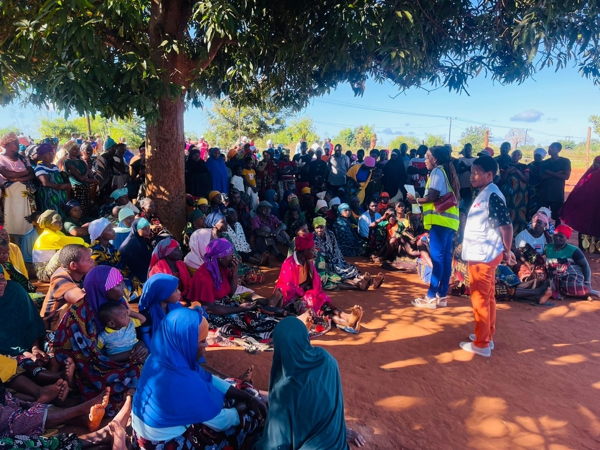
“The constant displacement of people caused by the conflict is bringing people into the area who have never been educated about cholera prevention measures,” explains Elisé Wilondja, MSF health promotion supervisor. To anticipate as much as possible any resurgence of the disease in this cholera-endemic area, MSF is raising awareness among community leaders to apply preventive hygiene measures and identify signs of the disease. People are also being trained to properly wash water containers that may be contaminated.

With more than 800 people receiving treatment, this is the most serious cholera epidemic in five years in the Ruzizi health zone.
The epidemic has been exacerbated by the constant displacements of people fleeing regular clashes between the Congolese army (FARDC), their Wazalendo allies, and the AFC/M23 armed group. Busimé, alongside her sick daughter Gisele, says. “I fled the war in the village of Kigurwe and returned to Sangé a month ago because my children couldn't adapt.”
In Sangé General Hospital, Nakitula, a 25-year-old farmer suffering from cholera, tells the same story. “I fled to Kahungwe, in the Health Zone of Lemera. But as I had no fields to cultivate and no means of subsistence there, I returned, as living conditions were becoming increasingly difficult. To survive at the moment, I do day-to-day work so that I can eat." These continued displacements of people are contributing to the spread of the epidemic with people being forced to live in crowded and sometimes unsanitary conditions in host families, without access to drinking water.
At the end of January, after an explosion in the city, killing several people and injuring a dozen others, the MSF emergency team had to evacuate Sangé for security reasons. However, it continues to carry out its activities remotely until mid-February.

 Behind the Kanyaruchinya health centre, this 15,000-litre tanker comes three times a day to feed the tanks. Photographer: Moses Sawasawa | Date: 04/11/2022 | Location: DRC
 Busime (left), sits with her three-year-old daughter Gisele, who is suffering from cholera and being treated at Sangé General Hospital in South Kivu province in the eastern Democratic Republic of Congo. Photographer: Frederic OMEGA | Date: 28/01/2026 | Location: DRC
DRC Sange Cholera_article_EN.docx
DOCX 24 KB
Jane Rabothata
About Doctors Without Borders (MSF)
Doctors Without Borders (MSF) is a global network of principled medical and other professionals who specialise in medical humanitarian work, driven by our common humanity and guided by medical ethics. We strive to bring emergency medical care to people caught in conflicts, crises, and disasters in more than 70 countries worldwide.
In South Africa, we currently run a non-communicable diseases (NCDs) project in Butterworth, Eastern Cape province, where we support the Department of Health (DoH) in improving care for patients with diabetes and hypertension. The project focuses on improving screening, diagnosis, management, and prevention of NCDs through advocacy, research, health promotion, training, and mentorship of Community Healthcare Workers.
MSF is also recognised as one of the pioneers in providing antiretroviral treatment (ART) in the public sector. It started the first HIV programme in South Africa in 1999. The organisation's earlier interventions in the country have primarily been on developing new testing and treatment strategies for HIV/AIDS and Tuberculosis (TB) in Eshowe (Kwa-Zulu Natal) and Khayelitsha (Western Cape). The Eshowe project was handed over to DoH in 2023 after 12 years of operations. The Khayelitsha project was closed in 2020 after 22 years of activities and campaigning for improved HIV and TB treatment.
Other projects we have been involved in include our Migrant Project in the country's capital, Tshwane, which was handed over to authorities and a local Community-Based Organisation after building the capacity to work with undocumented populations. We also previously offered free, high-quality, and confidential medical care to survivors of sexual and gender-based violence in Rustenburg, North West province.
To learn more about our work in South Africa, please visit this page on our website (www.msf.org.za). To support MSF’s work:
- SMS “JOIN” to 42110 to donate R30 Once-off
- Visit https://www.msf.org.za/donate