DARFUR, SUDAN: Healthcare on donkeys
In early September, I began work as MSF’s medical team leader in Rokero, an area with around 200,000 people. Our project provides medical services across two areas, Rokero and Umo, in the mountainous region of Darfur state called Jebel Marra.
Darfur has suffered through over a decade of conflict. Even though much has changed following the ousting of Omar al-Bashir and the installation of the new transitional government, the overall security situation remains fragile and violent clashes continue.
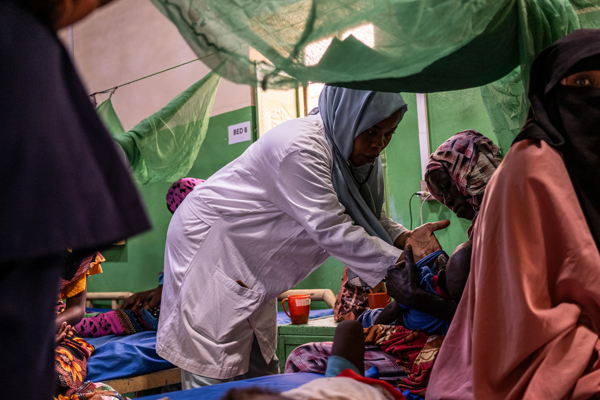
In February, MSF started providing medical services at a state-run health centre (called a ‘rural hospital’) in Rokero. We manage the inpatient department, the emergency room, the maternity and delivery wards and the observation room where we keep patients under surveillance for 24 hours until they can either be safely discharged or are admitted as inpatients. We also run an inpatient therapeutic feeding centre for malnourished children suffering from complications like diarrhoea or a respiratory tract infection. Patients with complicated injuries or health conditions are taken to a larger hospital in Al-Fasher town, the capital of North Darfur, six hours away by car.
The situation in both Rokero and Umo remains volatile. Many families that were displaced by previous conflicts found refuge around Rokero town and still live here. People continue to flee from violence from their villages to safer areas near bigger towns. Clashes continue to erupt, and we continue to treat injuries caused by the fighting. At night we can often hear gunfire.
Many communities in Rokero and Umo depend heavily on humanitarian assistance. Approximately 60 per cent of the population have no access to basic healthcare services. Out of 20 health facilities in the area only eight are functional, including the two MSF health centres.
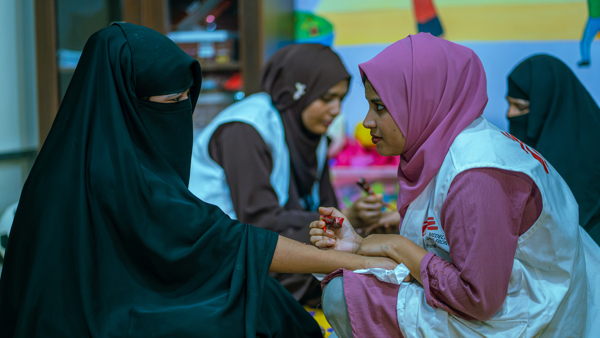
Our plans for 2020 were slowed down by the spread of COVID-19, but in early September we were able to open a small basic healthcare centre in Umo. When the team arrived for the first time the whole village, including elders, women and many children, welcomed us with excitement and anticipation. Since then, we have served this community six days a week, with a team of 20 experienced and dedicated Sudanese MSF staff, some from Umo, some from other parts of Darfur. We can treat as many as 70 patients in a day.
On my first the trip to Umo, we met with community elders to better understand the lives they lead, their expectations of MSF and their health needs. Our meeting was warm and very welcoming. The villages have been working hard to improve their living conditions. They have built some infrastructure, like stone pathways, but they have not had a functioning health centre in over a decade.
I have enormous admiration for our drug dispenser Najmadin Aden Mahamed, who does the trip at least once a week to bring supplies and drugs. It is difficult to imagine what that journey would be like for a woman from Umo experiencing complications while giving birth.
The number of deaths among pregnant women and new mothers is high in Darfur. When we met with the community elders, they told us that some women lose their babies in the first trimester of their pregnancy because they ride donkeys and work too hard. The number of women giving birth in the MSF delivery room is still low, but we have started to do more community outreach activities, speaking with community elders and engaging with traditional birth attendants. The antenatal check-ups, however, are already much frequented by pregnant women.
Most people here are farmers, growing sorghum and millet, but years of conflict have frequently disrupted farming activities, leaving families without their crops or with only a poor harvest. Furthermore, an economic crisis in Sudan means that many families cannot afford the escalating prices for staple products. Most can barely afford two basic meals a day. Women have to work especially hard, tending to both the fields and their children.
It is rewarding to work with such an experienced and dedicated team. We have 52 members of staff in Rokero and 20 in Umo, most from Darfur. Ali Mohamed Doud is an emergency doctor and our medical activity manager. He has worked with MSF in many different emergencies in Sudan.
Ali and our other colleagues know from their own experiences the hopes and worries of people in Darfur. They know too well that many communities in Jebel Marra struggle to access the basics, like primary healthcare, clean and safe water, education and protection. Some are cautiously optimistic about a recently signed peace agreement between the Sudanese transitional government and some rebel groups. There is hope it could be a first step toward peace, reconciliation and stability in Darfur, and a chance for the many hundreds of thousand displaced people to return home.
I am proud to be a member of a team that directly responds to acute health needs and helps save lives in a place that has long been neglected and where access of healthcare is still very limited.
###
.jpg)
.jpg) The biweekly medical and project supplies are brought by camels to Umo. The MSF drug dispenser in Umo accompanies together with the (female) owner of the camels. MSF uses camels for the supplies and heavier materials, and donkeys to carry people. There are also some people who help packing and uploading the supplies on the camels. Photographer: MSF
The biweekly medical and project supplies are brought by camels to Umo. The MSF drug dispenser in Umo accompanies together with the (female) owner of the camels. MSF uses camels for the supplies and heavier materials, and donkeys to carry people. There are also some people who help packing and uploading the supplies on the camels. Photographer: MSF.jpg) The biweekly medical and project supplies are brought by camels to Umo. The MSF drug dispenser in Umo accompanies together with the (female) owner of the camels. MSF uses camels for the supplies and heavier materials, and donkeys to carry people. There are also some people who help packing and uploading the supplies on the camels. Photographer: MSF
The biweekly medical and project supplies are brought by camels to Umo. The MSF drug dispenser in Umo accompanies together with the (female) owner of the camels. MSF uses camels for the supplies and heavier materials, and donkeys to carry people. There are also some people who help packing and uploading the supplies on the camels. Photographer: MSF.jpg)
.jpg)
.jpg)
.jpg)
.jpg)