Central African Republic: 5,000 still sheltering in MSF-supported hospital in Batangafo
"It was like a horror scene. We saw hundreds of households in flames. It was awful," says Helena Cardellach, MSF Field Coordinator in Batangafo.
Central African Republic
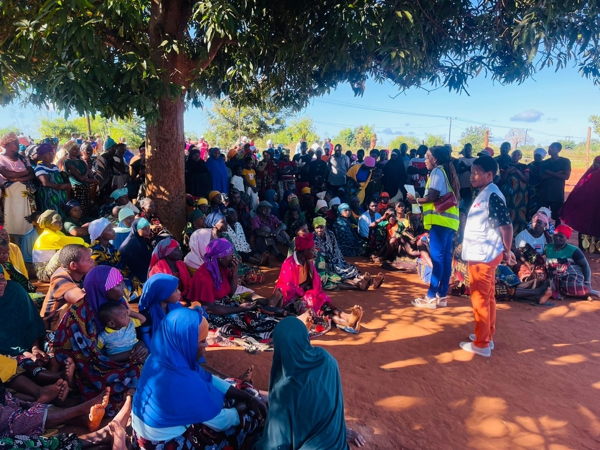
Fighting between two armed groups in Batangafo, in the north of the Central African Republic, in late October drove more than 10,000 people to seek shelter in Batangafo Hospital. More than 5,000 people still remain in the hospital, living in extremely precarious conditions. Many lost everything in the fires that ravaged their homes during the fighting. Despite a relative lull, the situation remains extremely tense.
"It was like a horror scene. We saw hundreds of households in flames. It was awful," says Helena Cardellach, MSF Field Coordinator in Batangafo. "It all began on Wednesday, October 31, 2018. We received one wounded patient at the hospital. He was a member of one of the armed groups that controls the city. It was after this incident that violent clashes erupted, eventually destroying a large part of the city of Batangafo." she continued, visibly affected by the events witnessed in the town.
In retaliation for the wounded man, one of the armed groups attacked three internally displaced persons (IDP) camps housing tens of thousands, burning large parts of the camps to the ground. "Even now you can still smell the ash. All the houses were burned, as well as the market and the chapel,” adds Helena.
The MSF-run Batangafo Hospital received around 20 victims, some of them shot and some with serious burns. The thousands of displaced people who lost everything are now living in a situation of extreme precariousness. "We are talking about people who have nothing, and who are living today in conditions of very poor hygiene," says Helena. With limited access to health care, they face serious risks of malaria, diarrhea, infections and epidemics. MSF is currently proceeding with an emergency response to install additional water facilities in the hospital in order to guarantee a minimum standard of hygiene for the displaced. MSF is particularly concerned about the access to health care for those who fled into the periphery and the bush.
"For the moment Batangafo is a ghost town. In the morning when there is a lull, people come out of their refuge in the hospital to try to live their lives, and then they go back to the hospital at night. These are scenes of desolation. The protection of the population must be ensured,” says Helena.
The Central African civilian population continues to paying the heaviest price of the conflict with more than 570,000 refugees in neighboring countries and nearly 690,000 internally displaced people out of a population of around 4.5 million.