CABO DELGADO, MOZAMBIQUE: Communities left terrified after violent attacks in Palma
On Monday, March 29, a team from MSF arrived in the Afungi peninsula, about 25 kilometers from Palma town, where some of the injured are arriving and people are seeking refuge. MSF’s objective is to provide medical assistance, stabilize patients and ensure the ones in critical medical conditions get evacuated. Our primary goal is to save lives.
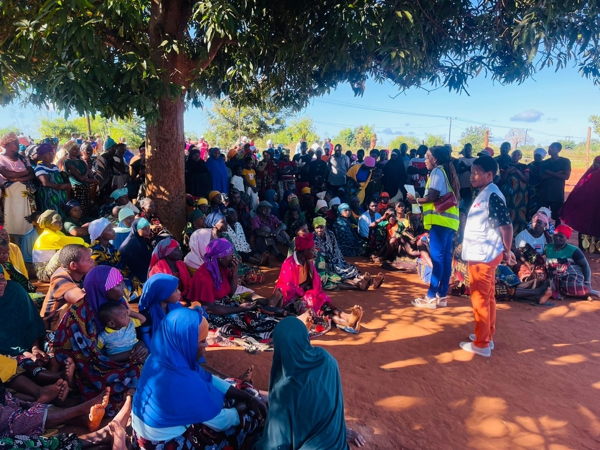
Since the violent attacks began last Wednesday, hundreds of people have come to Afungi in search of safety, most after fleeing by foot and hiding in the bush for days. We hear repeatedly that all they want is to leave. They are terrified. Most are in shock and are dehydrated and hungry. We have seen everything: people with minor to moderate injuries, as well as in critical condition with serious, life-threatening injuries.
Children are among those who have fled. We have cared for one baby with a bullet wound. Pregnant women are also coming in terrible condition – one woman, who appeared to be seven months pregnant had intense bleeding; her baby had already died. Mothers arrived with their new-borns, some only a day old, delivered in very difficult conditions. Most mothers seen by the team were in shock, dehydrated and hadn’t eaten for hours therefore, they were not able to feed their babies. It is a heart-breaking situation.
Before the attacks, Palma had an estimated population of several tens of thousands, including people that had already been displaced by fighting in previous months. Many of them have now reportedly fled away from the town in different directions: some have taken boats towards the south, others have gone inland through the bush or to the border with Tanzania, and many seem to still be hiding in the outskirts of Palma.
In parallel to the work our team is doing in Afungi, other MSF teams have prepared in Mueda, Nangade, Montepuez, Pemba and Macomia to support the medical and humanitarian needs of people fleeing from Palma. MSF teams have seen, for the moment, just a few hundreds of people arriving to places like Mueda and Montepuez in the last days. Some present mild sickness, muscle pain and small injuries as a result of walking for many hours, as the journey from Palma through the bush can take several days, with little to no access to water or food.
Our teams are working to ascertain where significant groups of people fleeing Palma are currently and where they will be heading to in order to adapt our response and provide medical and humanitarian assistance when feasible.
%20(1).jpg)
.jpg)
.jpg)
.jpg) MSF mental health activities include conversation circles, theatre, football matches, dancing and singing. “We try to understand what their lives were like before they escaped,” says a member of the mental health team. Photographer: Amanda Bergman
MSF mental health activities include conversation circles, theatre, football matches, dancing and singing. “We try to understand what their lives were like before they escaped,” says a member of the mental health team. Photographer: Amanda Bergman.JPG) MSF mental health activities include conversation circles, theatre, football matches, dancing and singing. “We try to understand what their lives were like before they escaped,” says a member of the mental health team. Photographer: Amanda Bergman
MSF mental health activities include conversation circles, theatre, football matches, dancing and singing. “We try to understand what their lives were like before they escaped,” says a member of the mental health team. Photographer: Amanda Bergman