A shot of urgency: Five key pathways to reach more people with lifesaving vaccines
Vaccines save millions of lives every year. They reduce the risks of getting a disease by working with the body’s natural defences to build protection against vaccine-preventable diseases. Immunisation – the process of protecting the human body against infectious disease, typically through vaccination administration – currently prevents 3.5 million to 5 million deaths every year from vaccine-preventable diseases like diphtheria, tetanus, pertussis (whooping cough), influenza, and measles. Vaccines are also very important in preventing and controlling infectious disease outbreaks.
And yet, although they are one of the most successful and widespread public health tools used to protect against diseases, vaccines are not always affordable, adapted to context, or accessible to everyone who needs them. And, in some cases, there are simply no vaccines available yet to protect against certain diseases.
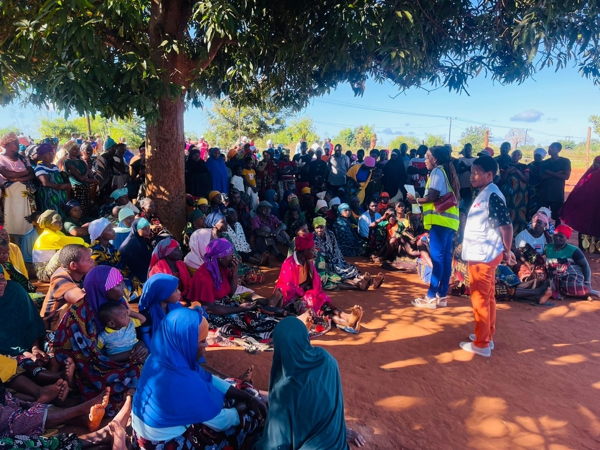
This World Immunisation Week and beyond, MSF teams in Pakistan, France, South Sudan, Nigeria, and Sudan share access and innovation advancements that, if achieved in the years to come, could result in lifesaving vaccines reaching more people around the world.

A vaccine to protect adolescents and adults against tuberculosis
Tuberculosis continues to kill more than 1 million people each year. That’s why we want to see a safe, effective, and affordable vaccine against tuberculosis which – when combined with sustained investment in preventive therapies, diagnostics, and effective treatment regimens – would be a significant step towards reducing global mortality due to tuberculosis. While there is a vaccine (BCG) that helps to protect young children from severe forms of tuberculosis, there is currently no approved vaccine that protects adults and adolescents, either before or after exposure to tuberculosis infection. However, with several vaccine candidates in clinical development showing some promising initial results, there may soon be a viable tuberculosis vaccine that everyone can benefit from. Read the statement from MSF’s International president on novel TB vaccines
Read the statement from MSF’s International president on novel TB vaccines
Innovations like vaccine Microarray Patches to overcome barriers in reaching remote areas
Through investing in innovative medical tools like microarray patches, we want to reach more people in remote, conflict-affected, and fragile settings with lifesaving vaccinations. Vaccine Microarray Patches (MAPs) allow vaccines to be administered through the skin without needles or syringes. While studies into MAPs are still ongoing, investing into their implementation is critical because they may be advantageous to normal vaccines in low-resource settings. They’re easier to transport, more thermostable (they require less refrigeration), and can be administered by community healthcare workers or volunteers after a brief training – all critical in remote settings far from routine healthcare and where there are often limited numbers of medical professionals available.

Find out more about our study on the use of MAPs in humanitarian settings
Hepatitis B birth dose vaccine for all newborns
We want to see hepatitis B birth dose vaccine introduced by every country without delay, so that more newborns can be protected from hepatitis B at birth. Each year, over a quarter of a million children acquire chronic hepatitis B at birth, resulting in many premature deaths due to liver cancer or other liver diseases. These deaths could be prevented if hepatitis B birth dose – an affordable vaccine supported by Gavi, the Vaccine Alliance since 2024 – were given to all newborns within their first 24 hours of life.
Find out more about our earlier call to Gavi to start its hepatitis B birth dose vaccine programme
Vaccines to protect against neglected diseases
We want to see increased interest and investment into the research and development of vaccines for neglected diseases, including Lassa fever. Neglected diseases are mainly prevalent among impoverished communities in tropical areas, are estimated to affect more than 1 billion people, and frequently cause significant public health issues. However, with neglected diseases rarely or never affecting people living in wealthier countries, there is limited attention and funding into vaccine research and development for these diseases. Safe and effective vaccines, including against Lassa fever, would be an impactful contribution to reducing the burden of neglected diseases in affected areas.

Find out more about how we’re responding to Lassa fever in Nigeria
Timely access to vaccines for all children, no matter where in the world they live
We want to see the rapid and uninterrupted supply and administration of vaccines to children everywhere, and especially those living in areas often underserved by vaccination activities. In 2024, 14.3 million children missed out on receiving any vaccination, half of whom lived in countries affected by conflict, fragility, or humanitarian crises. Reaching all children with vaccination is critical to preventing disease outbreaks and saving lives.
Find out more about our work on immunisation


 Teresa Krug | MSF
 A vaccine for diphtheria is prepared at a primary school in Gudum, Bauchi state, during a diphtheria vaccination campaign conducted by the State Ministry of Health in collaboration with MSF in northeast Nigeria. Photographer: Abba Adamu Musa | Date: 22/01/2026 | Location: Nigeria
 A Ministry of Health nurse collects blood samples of a suspected Lassa fever patient at the MSF-supported Lassa fever treatment centre, at the Abubakar Tafawa Balewa University Teaching Hospital, Bauchi, Bauchi state, northeast Nigeria. Photographer: Abba Adamu Musa | Date: 22/01/2026 | Location: Nigeria
WebArticle_Fiveaccess and innovationhopesforlifesaving vaccinestoreach more people_24042026 - Copy.docx
DOCX 920 KB
Rebaone Mogoera
About Doctors Without Borders (MSF)
Doctors Without Borders (MSF) is a global network of principled medical and other professionals who specialise in medical humanitarian work, driven by our common humanity and guided by medical ethics. We strive to bring emergency medical care to people caught in conflicts, crises, and disasters in more than 70 countries worldwide.
In South Africa, we currently run a non-communicable diseases (NCDs) project in Butterworth, Eastern Cape province, where we support the Department of Health (DoH) in improving care for patients with diabetes and hypertension. The project focuses on improving screening, diagnosis, management, and prevention of NCDs through advocacy, research, health promotion, training, and mentorship of Community Healthcare Workers.
MSF is also recognised as one of the pioneers in providing antiretroviral treatment (ART) in the public sector. It started the first HIV programme in South Africa in 1999. The organisation's earlier interventions in the country have primarily been on developing new testing and treatment strategies for HIV/AIDS and Tuberculosis (TB) in Eshowe (Kwa-Zulu Natal) and Khayelitsha (Western Cape). The Eshowe project was handed over to DoH in 2023 after 12 years of operations. The Khayelitsha project was closed in 2020 after 22 years of activities and campaigning for improved HIV and TB treatment.
Other projects we have been involved in include our Migrant Project in the country's capital, Tshwane, which was handed over to authorities and a local Community-Based Organisation after building the capacity to work with undocumented populations. We also previously offered free, high-quality, and confidential medical care to survivors of sexual and gender-based violence in Rustenburg, North West province.
To learn more about our work in South Africa, please visit this page on our website (www.msf.org.za). To support MSF’s work:
- SMS “JOIN” to 42110 to donate R30 Once-off
- Visit https://www.msf.org.za/donate