ZIMBABWE: CENA programme equips nurse aides to improve COVID-19 patient care at two hospitals
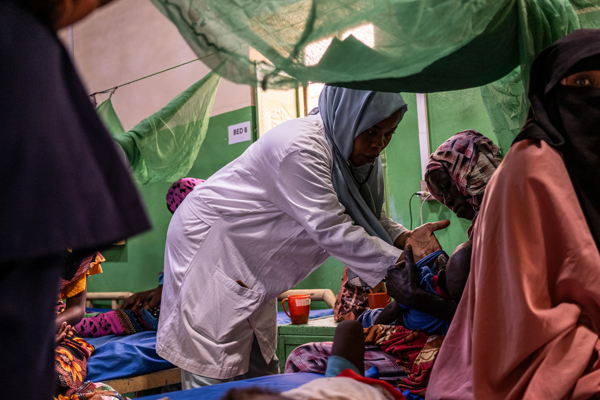
In a busy COVID-19 ward, simple but important elements essential for patients’ survival can be easily missed. COVID-19 patients require constant care, monitoring and management. Hence, the presence of nurse aides can save lives, as they are able to execute basic but essential tasks, like delivering oxygen therapy and repositioning oxygen masks that fall off.
Nurse aides play an important role in supporting nurses and doctors in human resource-limited settings. Zimbabwe, like many other low-income countries, has suffered from “brain drain” of healthcare professionals to high income countries during this COVID-19 pandemic. The subsequent human resources gap in government hospitals saw the few remaining nurses and doctors overwhelmed.
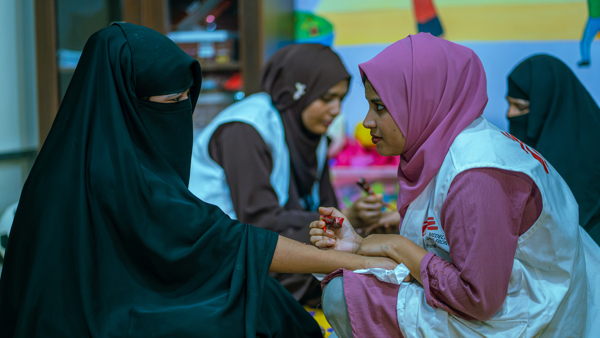
Along with other COVID-19 response interventions in Zimbabwe during the third wave, the international medical humanitarian organisation Doctors Without Borders (MSF) trained nurse aides on providing quality COVID-19 patient care to fill the gap in the provision of basic tasks at Wilkins Infectious Disease Hospital (WIDH) and Beitbridge District Hospital (BDH) using its COVID-19 Enrolled Nurse Aide (CENA) programme model.
The MSF CENA programme equipped nurse aides with basic technical knowledge to support the daily care of COVID-19 patients in hospitals. The nurse aides received a training focusing on easily missed basic tasks, like mouth and eye care. Nurse aides were further trained to always check if hydration lines are flowing well, monitor and fill up of humidifiers, check that masks or nasal prones are in place and that there are no kinks that could block the continuous oxygen flow and ensure patients are in proper proning position. Nurse aides were also provided with the tools for good patient communication, waste management and how to react in an emergency. MSF has also implemented similar CENA programme in Lesotho and South Africa.
“The main aim of employing the CENA concept was to relieve the overwhelmed nurses of some COVID-19 specific duties, which were shifted to nurse aides after the training,” said Shingairai Mawarire, MSF Nurse Mentor. “While the role of nurse aides existed in most hospitals around the country, their inclusion in COVID-19 wards focusing on patient care was new and essential. Increasing the number of nurse aides enabled nurses to focus on more technical nursing duties.”
In Beitbridge, MSF responded by setting up the Screening and Referral Unit (SRU) at the hospital entrance to screen and test for COVID-19. The organisation also supported the establishment of a 24-bed dedicated COVID-19 ward at BDH to ensure adherence of Infection Prevention Control (IPC) measures.
The organisation worked within the Ministry of Health and Child Care (MoHCC) facilities, providing human resources to address staff shortages and services needed in ensuring implementation of IPC measures. A few nurse aides were already part of the hospital staff, but they were doing auxiliary hospital duties, like cleaning and bed making.
“The training equipped me with basic technical skills to assist in the COVID-19 ward at Wilkins Infectious Hospital,” said Tariro Zhou, an MSF nurse aide.
Nurse aides helped patients to have a more comfortable and dignified experience in hospital. “Hospital staff and patients appreciated the help we were giving them,” added an ecstatic Tariro.
With the COVID-19 third wave curve flattening in Zimbabwe, MSF celebrates the role played by the nurse aides in improving patient care at BDH and WIDH hospitals.
“My main motivation was to play a significant role in patient management and IPC as this helps in reducing the transmission and increases the number of discharged patients. I got most of the satisfaction from patients who were discharged and to be part of the team which helped to save humanity in this pandemic,” said Mary an MSF trained nurse aide at BDH’s SRU.
“The upskilling of nurse aides improved morale and job satisfaction among nursing assistants leading to better patient care and timeliness of care,” confirmed Doctor Munya, MSF medical doctor.
MSF recommends to the Ministry of Health and Child Care (MOHCC) to equip hospitals with human resources, including nurse aides, in anticipation and preparation for future spikes in COVID-19 cases and the adoption of the CENA concept in order to improve the provision of basic but essential patient care in COVID-19 wards.
/ENDS.


.jpg)