Tester -One-hundred thousand children vaccinated amidst one of the largest measles outbreaks in the world
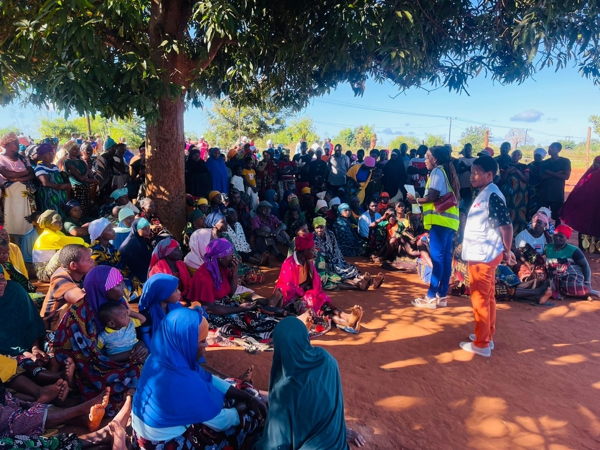
A crowd of women, children and local leaders are gathered under a large green-leaved tree in Burao, Somaliland, which offers some respite from the scorching sun at Aqil Yare camp for internally displaced people (IDPs). Years of consecutive below-average rainfall seasons have led to displacement, and a lack of access to clean water and sanitation, creating ideal conditions for infectious diseases outbreaks.
The people here have come for the vaccination campaign, which is scheduled to be conducted in their neighbourhood. Among them is Hiis Ali, a mother whose child barely survived the measles outbreak that is claiming the lives of many children here.
“I came to know that unvaccinated children can easily contract measles. My child was not vaccinated and he contracted measles. He had a high fever but luckily survived. Other children in the camp have also had very severe illnesses,” she says.
When Hiis heard that Médecins Sans Frontières (MSF) teams were vaccinating children against measles, she was keen to get her two youngest protected from the highly contagious and deadly illness.
Somalia and Somaliland are facing one of the largest outbreaks of measles in the world, according to the World Health Organization. Our teams have seen more than 7,000 patients with measles since the beginning of the year. Even though measles is endemic in Somalia and Somaliland, and several vaccination campaigns have been conducted, outbreaks continue unabated. The numbers of children with measles in MSF-supported health facilities continue to rise, increasingly affecting children far above the age of five.
The treatment of measles and setting up vaccination campaigns in Somalia and Somaliland is a huge challenge because IDPs and communities live in remote and hard-to-reach areas. In addition, most large families live under one roof in crowded IDP camps, creating perfect conditions for the rapid spread of the disease.
MSF’s immediate response in Somaliland
In May this year, our teams set up measles patient management facilities in Somaliland, with a total of 110 beds at two isolation rooms in Hargeisa and Burao, in an effort to provide medical care to children with measles complications.
Our teams have been seeing high numbers of patients with measles in both cities, treating over 1,250 patients as of mid-July. Similarly, we have set up measles patient management in Las Anod General Hospital. Since February, our teams treated 780 patients with measles in Las Anod hospital – most of them children.
This was followed by a mass vaccination campaign conducted in collaboration with Somaliland’s Ministry of Health Development (MoHD) in Burao and Oodweyne districts. We also donated vaccines to the health authorities to conduct measles vaccination campaigns in Aynabo and Buuhoodle.
The vaccination campaign reached 106,000 children under five against measles in Somaliland in July, covering IDPs and host communities. This represents 86 per cent of the target group, making it one of the biggest single measles campaigns ever registered in the region, according to MoHD.
“There is low-base vaccination coverage in Somalia and Somaliland. It is challenging to conduct vaccinations because people are dispersed, so there are a lot of complex logistics involved,” says Mohammed Musoke, MSF medical director.
“Our teams really have to go from house to house. Some of these houses are far from each other and most people have moved so they are not in one place,” he says.
Since early this year, MSF has been calling on health authorities and partners in Somaliland to urgently implement a wide-coverage reactive vaccination campaign, as well as enhanced routine measles vaccinations for children, to slow the transmission of measles infections and reduce mortality.
We will continue to support health authorities and partners in measles surveillance and alert the MoHD when we see unusual spikes. Our teams will also continue to provide medical support, both supplies and personnel, to ensure timely and proper patient management.
ENDS