NIGERIA: MSF warns of large-scale humanitarian disaster in North Eastern Nigeria
Geneva, 27 July 2016 – More than 500,000 people are living in extremely critical and unsanitary conditions in a number of villages and towns across Borno state, northeastern Nigeria, according to international medical organisation Doctors Without Borders (MSF), which is calling for the provision of emergency aid for those people in immediate danger.
“In Banki, as in a number of other areas, people have almost no access to humanitarian aid,” says MSF’s emergency programme manager Hugues Robert, who has just returned from this town near the Cameroonian border. “People are gathered, isolated and cut off in a half-destroyed town, and are totally dependent on external assistance, which is cruelly lacking. If we don’t manage quickly to provide them with food, water and urgent medical supplies, malnutrition and disease will continue to wreak havoc.”
The area around Banki, accessible only with a military escort, is currently sheltering some 15,000 people, the vast majority of them displaced from their homes by conflict. MSF medical teams estimate extremely high mortality rates. As many as one in 12 of the population may have died in the past six months, the organisation found after carrying out a rapid assessment of the local population.
The inhabitants of this region have suffered for years from the direct impact of the conflict between Boko Haram and the armies in the region. Forced to leave their homes by attacks and fighting, today they are faced with a local economy that has collapsed, trade routes that have been cut and crops and livestock that have been destroyed. Much of the population has been affected by months of food shortages, and their health situation is now catastrophic.
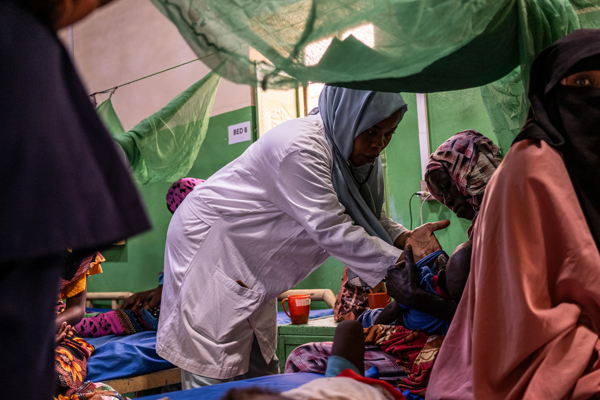
For children under five, in particular, the situation is especially concerning. Fifteen percent of children screened by our teams are suffering from severe acute malnutrition, putting their lives at risk. In the town of Banki, nearly one in three children is malnourished.
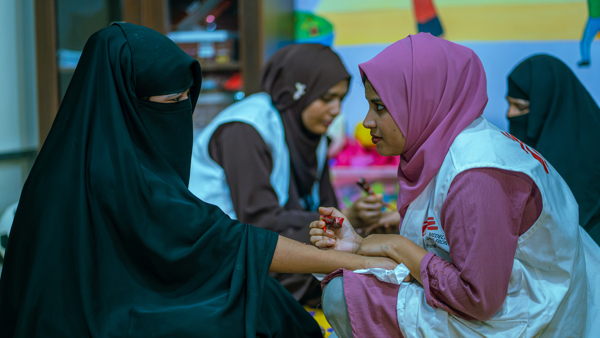
To respond to this humanitarian emergency, between 20 and 22 July MSF teams provided therapeutic feeding to more than 4,900 children and vaccinated them against measles. A total of 3,600 families received emergency food aid and our teams were able to transfer six people in a critical condition to a hospital in Mora, Cameroon. In Banki, MSF will also continue to provide clean water and improve sanitation.
The situation in Banki is similar to that found by the Nigerian authorities and other MSF teams and aid organisations in different parts of Borno state. In the town of Bama, for example, MSF teams estimate that 15 percent of children are suffering from severe acute malnutrition.
"We’re gradually discovering the extent of this crisis and we are particularly concerned for the inhabitants of the remote areas that we have not been able to access,” says Robert. “As the rainy season approaches, we are also aware of the growing threat of malaria.”
"We are committing to a long term operation in collaboration with the Nigerian authorities, and want to do our utmost to assist these vulnerable people,” says Robert. “However, there is a high level of insecurity in the region, with ongoing conflict and roads that are sometimes mined. Logistics are further complicated by the onset of the rainy season, which makes roads muddy and impassable. In conditions as precarious and dangerous as these, it is essential that people are allowed to seek refuge in safer areas, either in Nigeria or in neighbouring countries, and that those people who are seriously ill are referred to hospitals in the region.”
MSF calls on international organisations to mobilise to provide emergency food and medical aid to the people of Borno state.
The region is reaching breaking point due to attacks by Boko Haram, and a strong military response which has been launched to curb the violence. With more than 2.7 million people uprooted from their homes, the Lake Chad basin is currently home to one of the African continent’s biggest humanitarian crises. In response to the continued displacement and humanitarian needs, MSF has significantly scaled up its medical activities and assistance to people in the Lake Chad region in Chad, Cameroon, Niger and Nigeria. In 2015, our medical teams provided more than 340,000 consultations, treated 13,000 children for malnutrition and vaccinated more than 58,500 people against cholera.
ENDS