Nigeria: Health Disaster in Borno State
MSF Southern Africa launches emergency fundraising appeal for malnutrition treatment interventions, medical care, water & sanitation services
ABUJA/JOHANNESBURG – The health situation in Borno State in northeast Nigeria is critical. At least 500,000 people who are either displaced or cut off in enclaves outside state capital Maiduguri are in urgent need of food, medical care, drinking water and shelter. “Aid agencies must deploy a massive relief operation to respond to this health disaster”, says Dr Isabelle Defourny, Director of operations at Doctors Without Borders (MSF).
As the military regains control of the main towns and some villages in Borno State, the extent of the emergency is becoming all too apparent. Hundreds of thousands have been cut off from the outside world, some for as much as two years. Mostly displaced people living in towns now controlled by the military, they rely entirely on outside aid.
Assessments by United Nations agencies and the Nigerian authorities have shown how very serious the situation is and teams from SEMA (Borno State Emergency Management Agency), Red Cross and Unicef have distributed food and provided medical and nutritional treatment at several locations.
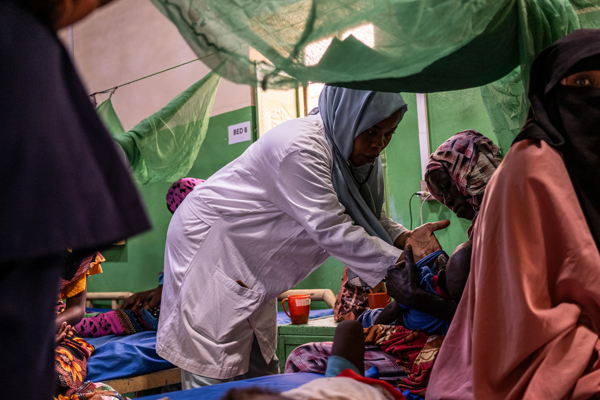
In June, an MSF team observed extremely high levels of malnutrition and mortality in Bama, Borno State’s second largest town. Bama is now a ghost town accessible only under army escort. Its inhabitants, estimated at over 10,000, live in a camp. While there are some food distributions and close to 1,500 people — the most vulnerable and sick — have been evacuated by the authorities, mortality rates are significantly higher than the emergency threshold and 15% of children are suffering from severe acute malnutrition.
An MSF team has arrived in Bama to provide support with medical and nutritional treatment. Their objective is to rapidly reduce mortality and malnutrition among the displaced. The most critical cases will be transferred to Maiduguri. Equally urgent is improving access to water as well as hygiene conditions in the camp.
Monguno, a town of 150,000 inhabitants — 65,000 of whom are displaced —, has been without medical care since January 2015. MSF plans to re-launch activities at the hospital and treat displaced and local children with severe acute malnutrition.
“A massive aid effort is vital to provide assistance to people who are cut off or in remote areas”, continues Dr Defourny. “Everything suggests that the situation of people in other towns like Dikwa is just as critical and that they also need food and medical care.” MSF is conducting other exploratory missions when and where it can, as insecurity is a major issue. Bama and Dikwa and areas close to the frontline exposed to attack by Boko Haram can only be reached under army escort.
Meanwhile, the displaced are continuing to seek refuge in Maiduguri. With such an influx of people, the town’s hospitals are overwhelmed and have to turn patients away. Only recently, six children with measles who could not be admitted to hospital were sent back to the displaced persons camp where their families had just arrived. Increasing inpatient capacity in Maiduguri is therefore another of MSF’s priorities.
- MSF Southern Africa is mobilising support for MSF’s growing medical humanitarian intervention in Borno State. We are calling for donations from South Africans to our NIGERIA EMERGENCY APPEAL
DONATE NOW
- SMS “JOIN” to 41486 to donate R15 per month
- Visit www.msf.org.za/donate
BACKGROUND:
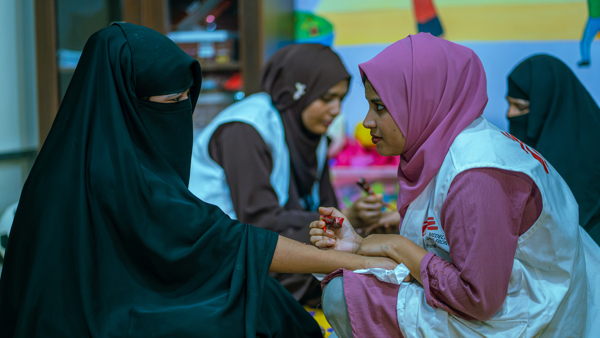
MSF has been working in Maiduguri in Borno State since August 2014. The organisation runs two clinics, a nutrition centre and a health centre in one camp and provides medical consultations. In recent months, MSF has developed large-scale projects to ensure water supply and acceptable standards of hygiene in camps in Maiduguri and continues to conduct epidemiological surveillance of people living in them. In 2015, MSF gave over 116,300 medical consultations, assisted 1,330 deliveries and treated 6,000 undernourished children.