Nigeria: Disastrous living conditions more deadly than violence
Conflict-affected populations in Borno state need emergency food aid now
ABUJA – The humanitarian emergency in northeastern Nigeria is reaching catastrophic levels. A massive relief effort is needed immediately in remote areas as well as in the state capital, the international medical humanitarian organisation Doctors Without Borders (MSF) said today.
The desperate living conditions in Borno State show the devastating impact of the ongoing conflict between Boko Haram and the Nigerian military. In several locations, people have sought refuge in towns or camps controlled by the military, and are entirely reliant on outside aid that does not reach them. “Although a nutrition emergency was declared three months ago, there has been a serious failure to help the people of Borno,” said Hugues Robert, head of MSF’s emergency response. “And we are again calling for a massive relief effort to be deployed now.”
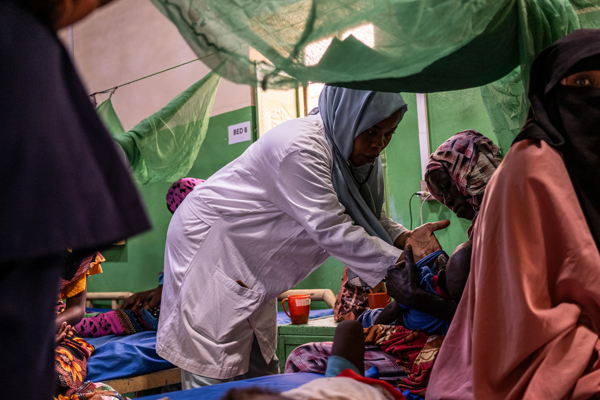
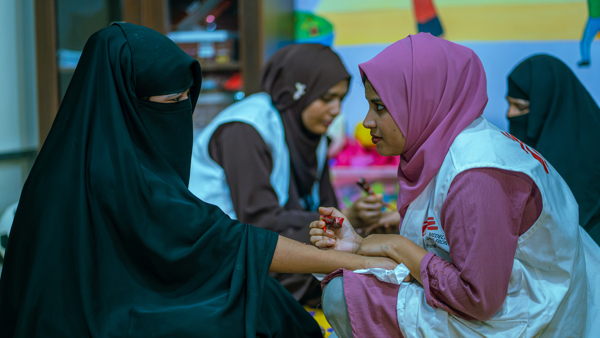
On 19 September, MSF teams managed to reach the town of Ngala, where 80,000 displaced people are living in a camp cut off from the outside world. They desperately lack food and healthcare. People are effectively stranded in the camp and cannot leave. A rapid nutritional screening of more than 2,000 children under the age of five found that one in 10 was suffering from life-threatening severe acute malnutrition. People in the camp reported having less than half a litre of water per person per day. MSF teams provided food and medical care and are scaling up assistance.
In nearby Gambaru, MSF teams found more than one in seven children suffering from severe acute malnutrition. The town’s 123,000 residents lack basic food supplies and have no access to healthcare after the town’s only clinic was burnt down. Roads are too dangerous for people to go elsewhere for medical care.
The desperate situation in Ngala and Gamburu matches that in Bama, Banki and Gwoza – all towns which were inaccessible until very recently due to insecurity, and where MSF has since been providing food and medical assistance. But most worryingly, in Maiduguri, where there is no conflict and aid organisations have been able to access the population for the last two years, MSF recorded malnutrition rates in some locations as high as those seen in the conflict zones. More than half of the 2.5 million people living in the state capital have been displaced from other areas of Borno. MSF teams screening children in the Custom House camp found that one in five children are suffering from severe acute malnutrition. The mortality rate is five times higher than what is considered an emergency, with the main cause being hunger.
“So far the aid response has been massively insufficient, uncoordinated and ill-adapted to the needs of people who are suffering the consequences of this crisis,” said Natalie Roberts, MSF emergency programme manager. “To avert an even greater humanitarian disaster, food and medical care must be delivered now to remote and accessible areas in Borno state. Nigerian authorities have a responsibility to make sure this happens for the sake of thousands who are at risk of imminent death.”
MSF has been providing healthcare to people displaced by violence, as well the host community, in northeastern Nigeria since mid-2014. Elsewhere in the country, in places like Zamfara, Port Harcourt and Jahun, MSF continues to run extensive projects on child health and sexual and reproductive health, and also responds to medical emergencies such as meningitis and measles outbreaks. In 2015, MSF teams performed 33,500 outpatient consultations, treated 18,100 patients for malaria, assisted 9,200 births and conducted 2,400 surgical interventions.

 MSF teams provided food and medical care and are scaling up assistance.
 People in the camp reported having less than half a litre of water per person per day.
 Teams have been able to offer medical consultations to the population in Gambaru inside a tent that was put up in health center that has been burnt down.
 The humanitarian situation in Borno is catastrophic and more assistance is needed, both in remote and accessible areas in Borno. MSF teams have done a cross-border assessment in Ngala and Gambaru in Nigeria where over 200.000 people are living in disastrous conditions and are in desperate need of food and aid. The situation there is similar to what has already been seen in enclaves like Bama, Banki and Gwoza and shows the devastating impact on the population of the conflict between Boko Haram and the Nigerian military forces. Disastrous living conditions and lack of food are killing more people than violence.