Mozambique: MSF will adapt critical healthcare in Mocímboa da Praia as people return home
Luis Montiel is emergency coordinator with Médecins Sans Frontières/Doctors Without Borders (MSF) working in Cabo Delgado, a northern province in Mozambique affected by ongoing conflict since 2017. In early April, Montiel led an MSF team which briefly visited Mocímboa da Praia to run some medical activities for the first time since the violence abruptly hit this coastal town two years ago.
What is the current situation in Mocímboa?
Mocímboa da Praia is an important coastal town in northern Mozambique and the capital of a district with the same name. Prior to the conflict it was a vibrant place with about 120,000 inhabitants, mostly dedicated to both artisanal and industrial fishing. The first attacks of the conflict in Cabo Delgado took place here in 2017. Later violence hit the town very hard and it was taken over in 2020 by members of a non-state armed group. In August last year Mozambican and Rwandese armed forces retook control of it.
Today there is no active fighting in Mocímboa and there hasn’t been an incident for a long time, although the situation is volatile in neighbouring districts. The town is empty, without civilians living there. Administration officials visit regularly the area, the port is being dragged and services like electricity and water have been restored. But there is no trade and while the streets are mostly clean, some signs of the destruction are still visible.
Why has MSF visited the town now?
MSF ran a medical project in Mocímboa throughout 2019 until March 2020, when we were forced to evacuate our teams as the place was being attacked. Even our office was partially burnt and occupied. This was the first time we returned since these events. We have been closely monitoring the situation and engaging with the different stakeholders to understand when community members may return. As we do in other parts of the province, MSF strives to adapt to the movements of people who flee conflict or who return to home areas after being displaced, to provide impartial medical and humanitarian assistance wherever the biggest needs are.
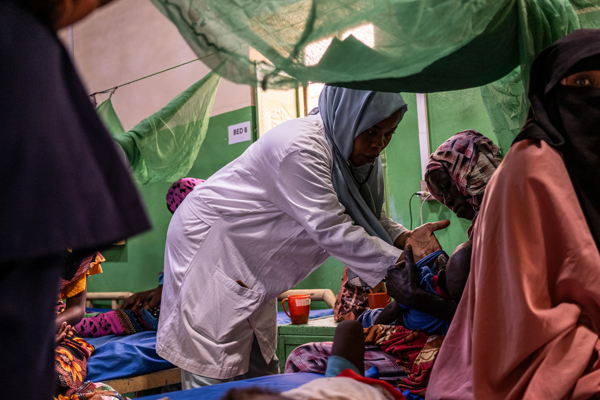
We were informed by civilian authorities that several dozen people who had spent a long time in the bush were transferred by the security forces to Mocímboa after being set free by the non-state armed group. Part of these people were sent to Nanili, a village in Mocímboa district. We were asked to do a mobile clinic to support people who stayed in the town. On 2 April we sent a small team to Mocímboa for a one-day visit during which we carried out consultations with 39 patients, mostly male adults and some teenagers and children as well. We didn’t find any critical medical issues and we only had to refer one patient who was suffering from cardiac problems to the Mueda rural hospital.
What will be our approach for the future?
People from Mocímboa town are still spread across different areas of Cabo Delgado, with significant communities in the cities of Palma, Montepuez, Mueda or in other villages of the district like Diaca or Nanili. The route that connects Mocímboa northwards with Palma is already transitable, but the route southwards towards Macomia is still unsafe. Through our work we know many displaced people from Mocímboa would like to return home, but for them the security is crucial and a certain restoration of the economy is imperative.
Our indicator to decide what medical support we can offer will be people and their needs. We are already running regularly medical activities in some areas of the district of Mocímboa and will adapt activities in the district’s capital to people’s return. MSF will aim to provide community members with healthcare through mobile clinics and with other humanitarian assistance as needed. We have prepositioned some basic medical kits and our teams will start preparing to support people’s critical medical needs.
MSF has been present in Mozambique since 1984. In Cabo Delgado our teams manage also stable projects in Mueda, Macomia and Palma.
.jpeg)
.jpeg)
.jpg)