Mozambique: MSF concludes medical intervention in Palma five years after deadly attack
In late March 2021, non-state armed groups later affiliating to Islamic State Mozambique attacked and looted the town of Palma, in Mozambique. Over several days of siege, more than 1,000 people were reportedly killed and nearly 67,000 displaced.1,2 The attack cut off the coastal town, which is known internationally for hosting major liquefied natural gas projects. This had immediate and devastating consequences on residents and the healthcare system. Some health facilities were severely damaged, including Palma district hospital; medical staff fled, and entire communities were left without care.
“When we arrived, it was a state of emergency,” recalls Esperança Gabriel António, midwife activity manager for Doctors Without Borders (MSF). “Pregnant women were trying to survive hunger while carrying their pregnancies.”

In the immediate aftermath of the attack, MSF began emergency medical activities, setting up operations in Afungi, where thousands of people were seeking refuge after days of walking through forests without food or water.
“After the war [attack], we were the first ones to support the health units,” says António João Jenga, clinical officer. “The staff were no longer there.”
For a few weeks during the peak of the emergency, we provided general healthcare, treated people for traumatic injuries and illnesses, and facilitated referrals and evacuations for critical patients in a context where even basic care was no longer available.
As security conditions gradually evolved and people began returning to Palma later in 2021 and into 2022, healthcare needs shifted. The provision of emergency care gave way to the immense challenge of rebuilding routine services.

MSF expanded mobile clinics to underserved areas across Palma district, while supporting essential services at Palma district hospital and other facilities. In collaboration with the Ministry of Health, maternal and child health care, sexual and reproductive health services, inpatient and outpatient care, vaccinations and mental health services were progressively re-established. In the five years following the acute phase of the emergency, we provided more than 76,000 outpatient consultations and over 5,300 inpatient consultations, assisted in more than 4,100 deliveries, and treated over 20,000 cases of malaria.
Yet access to care remained fragile, particularly for residents of remote areas. Distance, transportation costs and insecurity continued to affect people’s ability to reach treatment.
“If the hospital is far and you don’t have money, how will you go?” asks Sumail Issa, a patient from Olumbe. “With MSF, I could finally do tests for serious diseases, like diabetes.”
Years of conflict and displacement had also severely impacted care for people living with HIV and tuberculosis (TB), which require long‑term, uninterrupted treatment.
Before the 2021 attack, records from the Ministry of Health show that around 5,000 people were receiving treatment for HIV in Palma district. The conflict severely disrupted services, interrupting people’s care. When health services began operating more regularly in late 2023, HIV and TB care emerged as a critical gap. As of 2025, only around 1,600 people were actively on treatment for HIV.
“At the beginning, nobody was paying attention to HIV,” says Edwin Moshi, MSF’s medical activity manager in Palma. “We have patients who know their status but are unable to follow treatment for different reasons. We have people who deny their status. We lost some patients due to inadequate follow-up.”

Beginning in 2024, MSF placed increased emphasis on HIV, TB, and advanced HIV. Together with the Ministry of Health, we strengthened diagnostics, laboratory capacity, and patient tracing. In less than two years, 348 people were treated for advanced HIV, many of whom presented late to care.
Surveys carried out by MSF health promotion teams across Palma district show that many people understand HIV and TB through symptoms and rumours rather than medical explanations. HIV is often perceived as a death sentence or a disease 'brought by foreigners'; TB is feared as highly contagious through everyday contact.
Some community members believe they might contract HIV at health facilities through medicines or tests. Others delay care because illness is attributed to witchcraft or spiritual causes, leading them to seek help first from traditional healers. Fear of stigma and social exclusion discourage people from testing and sticking to treatment. In some cases, people hide their condition or stop taking medicine once they feel better.

To try and address these challenges, MSF invested in community engagement, counselling and mental health services, working alongside community health workers, midwives and local leaders to rebuild trust in healthcare.
“We do sessions about HIV and when we talk about it, people gain courage to continue treatment,” says Teodoro Joaquim Vicente, a community mental health worker in the district.
As part of this work, MSF launched a ‘test and treat’ campaign across six communities in Palma district in 2025. This approach combined door‑to‑door outreach, testing at public gathering points, and strengthening patient follow‑up. Nearly 5,000 people were tested for HIV, almost one‑third of them for the first time. While early linkage to treatment was initially low, improved follow‑up raised the number of people who started antiretroviral treatment for HIV from 15 per cent to 77 per cent between campaign rounds.
The results highlighted both progress and ongoing fragility. Mistrust, fear of diagnosis, distance to facilities, and inconsistent service quality continue to limit people’s ability to be tested and to follow treatment.

All seven health centres across Palma district are open once again, with strengthened Ministry of Health capacity. We are concluding our medical activities in the district, marking the end of a project that evolved from emergency response to health system reconstruction, and now handover.
Yet, healthcare systems that have been damaged by years of conflict and persistent insecurity take time to recover. Staff shortages, limited coordination and communication between health facilities, long distances, and medicine stock ruptures continue to affect people’s access to and continuity of care.
Palma remains widely known as the epicentre of Mozambique’s major liquefied natural gas projects, attracting investment and international attention. The essential, slow work of rebuilding healthcare and trust remains far less visible. As MSF concludes our activities, sustained attention is still needed to ensure access to free, quality healthcare for communities in Palma and across northern Mozambique.
Read more about our activities in MozambiqueIn Cabo Delgado province, MSF continues to run projects in Mocímboa da Praia and Macomia, and in detention centres in Pemba. We provide general consultations, maternal and paediatric services, sexual and reproductive health care, treatment for HIV and tuberculosis, and mental health and psychosocial support. These activities are carried out through mobile clinics and outreach, patient referrals to health centres, and supporting medical facilities and hospitals in collaboration with the Ministry of Health. We also respond to emergencies in Cabo Delgado and other provinces in Mozambique.
In 2025, we carried out over 100,000 outpatient consultations, treated nearly 50,000 malaria cases, and assisted in 7,500 child births, in Mozambique.
1 Zitamar News: https://www.zitamar.com/over-1-190-killed-in-2021-palma-massacre-new-survey-finds/


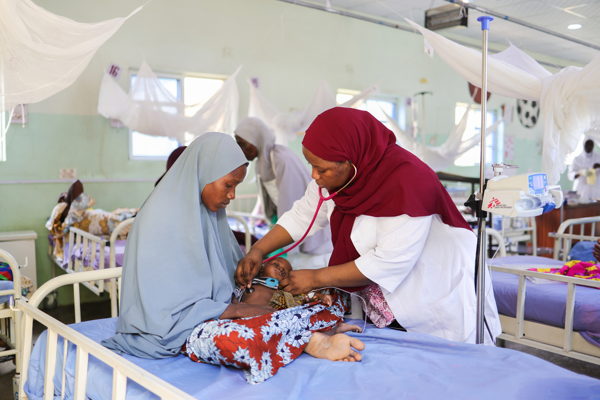
 Francisca Bota, an MSF midwife, examines a patient in Eduardo Mondlane, Palma district, Cabo Delgado province, northern Mozambique. Photographer: Sofia Minetto | Date: 23/02/2026 | Location: Mozambique
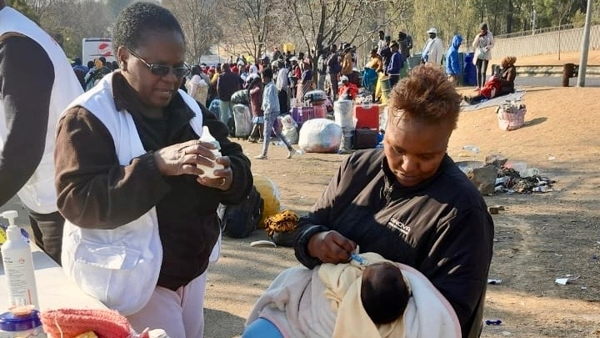
 Olumbe, a community located more than 30 kilometres from the town of Palma, is one of the areas of Palma district where MSF operated mobile clinics. Photographer: Costantino Monteiro| Date: 19/04/2024 | Location: Mozambique
202607_webarticle_MSF concludes activities in Palma_EN.docx
DOCX 39 KB
202607_timeline and key figures_Palma_EN.docx
DOCX 39 KB
Jane Rabothata