Haiti: Women risk their lives to access sexual and reproductive healthcare
In Port-au-Prince, every movement poses a risk. For thousands of women, seeing a doctor, obtaining contraceptives, attending prenatal check-ups or receiving care after sexual assault has become fraught with obstacles.
In a capital where armed violence is undermining an already fragile health system, access to sexual and reproductive healthcare is increasingly limited. Yet such care remains essential at every stage of life.

One recent morning, a 29-year-old woman was admitted, barely conscious, to the Isaïe Jeanty maternity hospital, which is supported by Doctors Without Borders (MSF). After giving birth at home a few hours earlier, she had developed postpartum eclampsia, a serious complication that can be fatal without prompt treatment.
Her stepfather accompanied her on a motorcycle from Cité Soleil, with her newborn baby in his arms. "I was shaking when I arrived; I thought it was a lost cause. This morning, she looked as if she were dead," he says in the maternity ward, where about 15 women are being monitored by medical teams. "But now she's almost smiling. It's as if she had been brought back to life".
Haiti has the highest maternal mortality ratio in the Americas. According to WHO estimates, it stood at 328 deaths per 100,000 live births in 2023, compared to 197 globally and 58 in the Americas region[1].

These numbers illustrate the gradual collapse of a health system weakened by the expansion of armed groups, institutional instability and chronic underfunding of public services. In Port-au-Prince, many health facilities have closed their doors, thus severely reducing access to essential healthcare – especially for women and their sexual and reproductive healthcare
Many pregnancies are not monitored by trained professionals, and births take place at home without medical assistance. Without timely access to healthcare, complications such as eclampsia, haemorrhages, infections or neonatal distress may be detected too late.
"We had to refer a woman at eight months of pregnancy to give birth to her baby who died in utero. She had never been able to receive prenatal check-ups. This should not be happening: these are preventable complications that become fatal without medical support," says a midwife at an MSF mobile clinic.
For many women, reaching a health facility has become an ordeal. Armed clashes, shifting front lines, checkpoints, roads blocked by mountains of rubbish, transport costs and forced displacement complicate every consultation.
"Patient transfers are extremely difficult: transport is limited, and functional maternity and neonatal units are scarce," says Naomi Lubin, an MSF supervising midwife.
Added to this is another challenge: some women are reluctant to leave their neighbourhood for fear of being identified with their place of residence. In a city divided between neighbourhoods controlled by armed groups and others by the authorities, an address can be enough to stigmatise a person or lead others to suspect them of having links to an armed group. Leaving one’s neighbourhood to go to hospital can then become life-threatening.

"My two-year-old child hasn't been vaccinated for a year and a half because I can't leave the area. I don't want to go out with my identity card with my address indicated. I'm scared. You could get killed," says one of our patients, a 38-year-old woman.
Like many other women living in Port-au-Prince, violence is disrupting many aspects of her life, including access to healthcare.
In response, MSF has set up mobile activities to bring care closer to the communities. Every week, medical teams provide primary healthcare in former schools or churches, in multiple neighbourhoods, offering consultations for several hours. In the first half of 2026, they provided 4,500 sexual and reproductive health consultations.
To strengthen the continuity of care in the long term, MSF is also investing in the rehabilitation of the Isaïe Jeanty maternity hospital in Cité Soleil, an existing public facility. Working alongside the Ministry of Health, the teams provide emergency obstetric care, including caesarean sections, as well as contraception and care for survivors of sexual violence.
In the first half of 2026, staff assisted with 929 deliveries, including 285 emergency caesarean sections. 257 patients were also referred, with their newborns, to other health facilities for the management of serious complications.
Despite these efforts, the needs remain immense. Insecurity continues to limit the movement of patients and medical staff.
"When clashes affect our medical facilities, we have to suspend our activities and evacuate the premises. This has happened twice in the last two months. These suspensions drastically reduce referral options and complicate the management of obstetric emergencies, as well as many other sexual and reproductive health needs," concludes Diana Manilla Arroyo, MSF head of mission in Haiti.
Ensuring continued access to this care remains essential to safeguarding the health and lives of thousands of women and girls in Port-au-Prince.
[1] https://data.who.int/indicators/i/C071DCB/AC597B1?m49=332
Read more about our activities in Haiti20260818_Haiti_SRH article_EN.docx
DOCX 29 KB
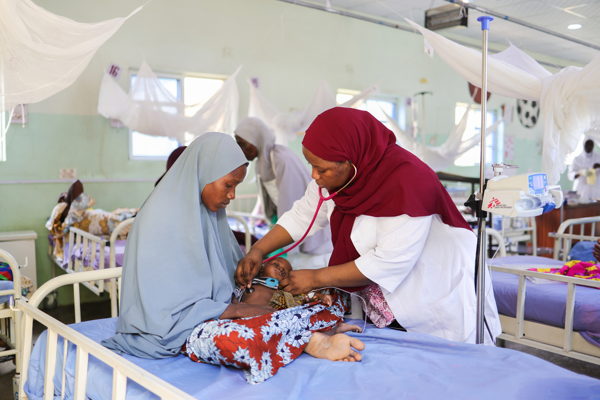
 Anne Suze Fermont, an MSF midwife, speaks with a patient during a sexual and reproductive health consultation in a mobile clinic in Bélair, a neighbourhood of Port-au-Prince affected by armed violence. In this neighbourhood, the residents who remain have limited access to healthcare. Photo: Marx Stanley Léveillé |Location: Haiti | Date: 18/08/2026
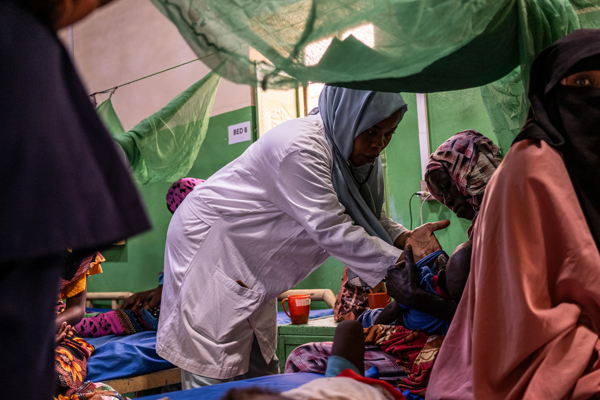
 In Bel Air, a neighborhood of Port-au-Prince controlled by armed groups and marked by frequent gunfights, women seeking maternal and other healthcare wait at a mobile clinic in an abandoned school operated by Médecins Sans Frontières. The clinic opens just for a few hours when the security situation allows for it. Access to the community is negotiated with the armed groups controlling the area. Photo: Jelle Krings|Location: Haiti | Date: 19/12/2025
About Doctors Without Borders (MSF)
Doctors Without Borders (MSF) is a global network of principled medical and other professionals who specialise in medical humanitarian work, driven by our common humanity and guided by medical ethics. We strive to bring emergency medical care to people caught in conflicts, crises, and disasters in more than 70 countries worldwide.
In South Africa, we currently run a non-communicable diseases (NCDs) project in Butterworth, Eastern Cape province, where we support the Department of Health (DoH) in improving care for patients with diabetes and hypertension. The project focuses on improving screening, diagnosis, management, and prevention of NCDs through advocacy, research, health promotion, training, and mentorship of Community Healthcare Workers.
MSF is also recognised as one of the pioneers in providing antiretroviral treatment (ART) in the public sector. It started the first HIV programme in South Africa in 1999. The organisation's earlier interventions in the country have primarily been on developing new testing and treatment strategies for HIV/AIDS and Tuberculosis (TB) in Eshowe (Kwa-Zulu Natal) and Khayelitsha (Western Cape). The Eshowe project was handed over to DoH in 2023 after 12 years of operations. The Khayelitsha project was closed in 2020 after 22 years of activities and campaigning for improved HIV and TB treatment.
Other projects we have been involved in include our Migrant Project in the country's capital, Tshwane, which was handed over to authorities and a local Community-Based Organisation after building the capacity to work with undocumented populations. We also previously offered free, high-quality, and confidential medical care to survivors of sexual and gender-based violence in Rustenburg, North West province.
To learn more about our work in South Africa, please visit this page on our website (www.msf.org.za). To support MSF’s work:
- SMS “JOIN” to 42110 to donate R30 Once-off
- Visit https://www.msf.org.za/donate
Jane Rabothata