Haiti: Escalating violence is having a direct impact on the bodies of women and girls
Sexual and gender-based violence (SGBV) has surged in Haiti's capital since 2021 and is being used systematically to terrorise the population, with a disproportionate impact on women and girls, according to a report released today by Doctors Without Borders (MSF). This crisis is occurring as infrastructure, public services, and living conditions have deteriorated dramatically amid widespread violence and insecurity.
MSF's report, “Sexual and gender-based violence in Port-au-Prince, Haiti,” is based on 10 years of medical data and testimonies collected at MSF's Pran Men'm clinic. Since MSF opened the clinic in 2015, it has provided comprehensive medical and psychosocial care to nearly 17,000 people, 98% of whom are women and girls.

“The number of survivors of sexual and gender-based violence who receive care at the clinic has almost tripled from an average of 95 admissions per month in 2021 to more than 250 in 2025,” said Diana Manilla Arroyo, MSF head of mission in Haiti. “This shows how the explosion of violence in Haiti in recent years has had a direct impact on the bodies of women and girls in Port-au-Prince.”
The report shows that women and girls of all ages are being targeted and that a growing number of survivors are displaced from their homes, which exposes them to further violence. Nearly one-fifth of the survivors treated at Pran Men'm have suffered multiple incidents of SGBV.
There also been a shocking increase in the brutality of the violence. Among survivors who have received care at Pran Men'm since 2022, 57% reported being assaulted by members of armed groups, often in the context of group assaults committed by multiple perpetrators. More than 100 patients reported being assaulted by 10 or more perpetrators at a time.

“They beat me and broke my teeth..." said one 53-year-old survivor quoted in the report. "Three young men who could have been my children.... When I refused to sleep with them, they hit me and I fell. While I was struggling, they kicked me in the back, which still hurts months later. After raping me, they raped my daughter... and beat my husband.”
The report highlights the persistent shortcomings in the availability of services for survivors. MSF is often unable to refer its patients to essential non-medical assistance—such as safe shelters, relocation options, or livelihood support—which are indispensable for many survivors. This situation underscores the urgent need to strengthen and sustain funding for protection services.

Survivors also face numerous barriers—such as fear of stigma, financial difficulties, insecurity, and lack of information—that prevent them from accessing care in a timely manner, which unfortunately has medical consequences. Since 2022, only one-third of survivors who consulted the Pran Men’m clinic arrived at the clinic within three days of their assault: beyond this timeframe, it is no longer possible to prevent HIV transmission. Similarly, 59% of our patients during this period were unable to access care within five days in order to protect themselves from unwanted pregnancy.
This report calls for urgent and coordinated action by Haitian authorities, service providers, donors, United Nations agencies, and security actors in favour of a survivor-centred response focused on long-term recovery.
"We call for expanded access to comprehensive medical and psychosocial care free of charge, which can only be achieved through a sustainable increase in funding for support services," Manilla Arroyo said. "Equally important, we call for unequivocal recognition of the widespread nature of sexual violence and its deliberate use by armed groups as a tool to control and subjugate women and girls. These are the challenges that must be addressed to empower survivors to regain control of their bodies and their lives."

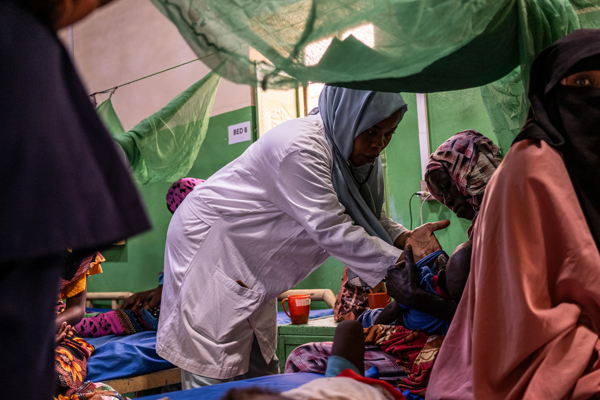
 At MSF’s office, a 51-year-old woman describes to staff the multiple times she was subjected to sexual violence. In one instance, she was assaulted while she and her family were kidnapped by a group of armed men. She was able to pay a ransom for her family’s release, but her father later died of injuries sustained during his captivity. Photographer: MSF | Date: 19/12/2025 | Location: Haiti
 A 41-year-old woman shares her experience of sexual violence and displacement with MSF staff at the organisation’s office. When an armed group took over her neighbourhood, she fled to a displacement camp to ensure the safety of her children. She later returned home to retrieve essential items, where she was assaulted by a group of armed men. Photographer: MSF | Date: 01/09/2025 | Location: Haiti
20260128_PR_EN_MSF report documents alarming rise of sexual violence in Port-au-Prince, Haiti.docx
DOCX 25 KB
Sexual and Gender-Based Violence in Port-Au_Prince, Haiti.pdf
PDF 4.9 MB
Jane Rabothata
About Doctors Without Borders (MSF)
Doctors Without Borders (MSF) is a global network of principled medical and other professionals who specialise in medical humanitarian work, driven by our common humanity and guided by medical ethics. We strive to bring emergency medical care to people caught in conflicts, crises, and disasters in more than 70 countries worldwide.
In South Africa, we currently run a non-communicable diseases (NCDs) project in Butterworth, Eastern Cape province, where we support the Department of Health (DoH) in improving care for patients with diabetes and hypertension. The project focuses on improving screening, diagnosis, management, and prevention of NCDs through advocacy, research, health promotion, training, and mentorship of Community Healthcare Workers.
MSF is also recognised as one of the pioneers in providing antiretroviral treatment (ART) in the public sector. It started the first HIV programme in South Africa in 1999. The organisation's earlier interventions in the country have primarily been on developing new testing and treatment strategies for HIV/AIDS and Tuberculosis (TB) in Eshowe (Kwa-Zulu Natal) and Khayelitsha (Western Cape). The Eshowe project was handed over to DoH in 2023 after 12 years of operations. The Khayelitsha project was closed in 2020 after 22 years of activities and campaigning for improved HIV and TB treatment.
Other projects we have been involved in include our Migrant Project in the country's capital, Tshwane, which was handed over to authorities and a local Community-Based Organisation after building the capacity to work with undocumented populations. We also previously offered free, high-quality, and confidential medical care to survivors of sexual and gender-based violence in Rustenburg, North West province.
To learn more about our work in South Africa, please visit this page on our website (www.msf.org.za). To support MSF’s work:
- SMS “JOIN” to 42110 to donate R30 Once-off
- Visit https://www.msf.org.za/donate