Guinea battling a large scale measles epidemic
Less than a year after the official end of the Ebola epidemic, the Guinean health system continues to struggle
Guinea
The international humanitarian organisation Doctors without Borders (MSF) is launching today a large scale measles vaccination campaign in the capital of Guinea, Conakry, together with the Guinean ministry of Health. Since the beginning of the year there have been 3468 confirmed cases and 14 deaths dues to measles in Guinea. Conakry and Nzérékoré are the most affected districts.
Routine vaccination in Guinea was drastically reduced during the 2014-2015 Ebola epidemic, both because most resources and attention were geared towards the management of Ebola and, mainly, due to fear: people stayed away from health facilities, vaccination activities were suspended because infection risks; this left thousands of young children unprotected against easily preventable diseases. A nation-wide vaccination campaign was organised by authorities one year ago to vaccinate the children who had not received their shots (MSF did not participate to this campaign). Despite this catch up effort, a measles epidemic was declared on February 8th 2017.
“The fact that a new epidemic occurs barely a year after a massive vaccination campaign is a worrying sign of the weakness of health care in Guinea”, deplores Ibrahim Diallo, MSF’s representative in Guinea. “Major problems remain in the health system, undermining its capacity to prevent and respond to outbreaks effectively and timely.”
After the devastating Ebola epidemic that killed over 11.000 people and severely affected the health systems of the three most affected countries (Guinea, Sierra Leone and Liberia), the WHO and leading public health experts insisted on the importance of rebuilding responsive health systems in the three countries, equipping and supporting them to better manage similar or new health crises.
According to the UN body in charge of Ebola response , only 18% of the funds disbursed to support the countries’ during Ebola were meant for recovery. International donor commitments to health systems strengthening has focused on improving disease surveillance to assure early detection and response of outbreaks, such as Ebola. International donor commitments to health systems strengthening has focused on improving disease surveillance to assure early detection and response of outbreaks, such as Ebola. However, today, faced with a large outbreak of measles, MSF (in Conakry) and Alima (in Nzérokoré district) up to now are the NGOs providing support to the Ministry of Health for the vaccination campaign in the worst affected districts. WHO and UNICEF have pledged support to other affected districts across the country, which is still under discussion.
“If Ebola was a wakeup call, since then the world seems to have fallen back asleep. As shown by this measles outbreak, the concrete impact of the promises of funding, support and training made during and after the Ebola crisis still remains to be felt by ordinary Guineans” , says Dr Mit Philips, MSF’s Health Policy Analyst. “Access to good healthcare was clearly lacking before Ebola struck, and the country is still facing today the same problems that it was facing then, largely alone, in spite of the international public commitments to build better and more responsive health systems”.
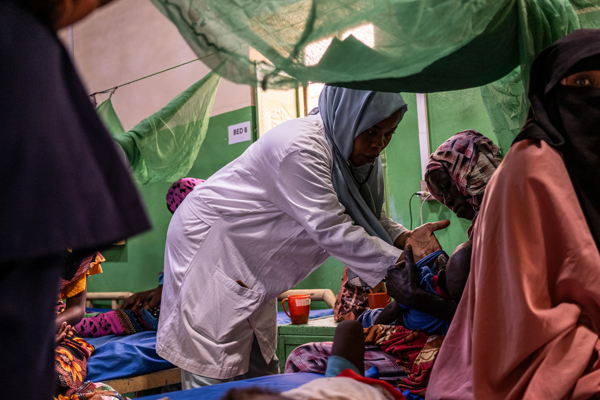
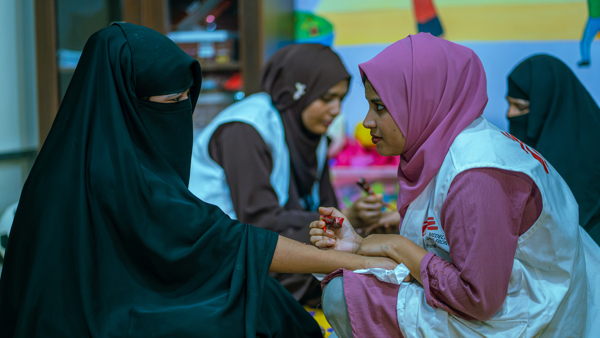
To contain the measles epidemic, MSF, with the Ministry of Health in Conakry, is mobilising 126 teams of 13 people, spread out across 164 vaccination sites in the city of 3 million people. All children from 6 months up to 10 years old will be vaccinated. MSF also supports 30 health centers in Conakry to care for children suffering from mild cases of measles, as well as the referral center where severe cases are hospitalised.