Ethiopia: Hospital serving 300,000 people struggles to deliver lifesaving care in Alamata
Doctors Without Borders (MSF) has expanded its support to Alamata general hospital to help restore and strengthen life-saving healthcare services
The hospital, which serves as the main healthcare facility for an estimated 300,000 people in Alamata town and surrounding areas, has been facing severe operational challenges. These include prolonged supply chain disruptions, damaged infrastructure, limited referral capacity and a critical shortage of healthcare workers in addition to the limited resources. As a result, the quality of care has declined sharply, putting many patients – especially mothers, newborns and patients with life-threatening conditions at serious risk.

MSF began supporting Alamata general hospital in March 2026 and later expanded its comprehensive targeted support to the maternity and emergency departments as well as the neonatal intensive care unit (NICU). This scaled-up intervention aims to restore essential life-saving services and strengthen healthcare access for communities in Alamata town and the surrounding areas.
“These are the departments where the most critically ill patients are at high risk of dying if they cannot access timely, quality services,” said Farayi Marume, MSF’s project medical coordinator
MSF’s intervention focuses on urgent infrastructure rehabilitation, the provision of critical medical equipment and on the job capacity building for healthcare workers to ensure hands-on implementation, as well as strengthening of the hospital’s referral system. The support responds directly to severe gaps affecting the hospital’s ability to provide essential care, and aims to reduce preventable deaths among vulnerable patients.
“By working closely with the hospital and local authorities, we hope to alleviate some of the immense pressure on the health system and help restore a minimum level of reliable care for the communities that depend on Alamata general hospital,” Marume said.
Read more about our activities in EthiopiaOnce a major referral centre offering specialised services in internal medicine, paediatrics, and obstetrics and gynaecology, the hospital is now operating under extreme strain. It lacks a functional triage system, leading to overcrowded wards where patients, including vulnerable newborns, are exposed to heightened dangers. Unreliable electricity and water supplies, poor sanitation, and weak infection prevention and control, worsened by shortages of basic items such as gloves and masks, further increase the risk of complications and preventable deaths.
Critical departments, particularly the maternity, NICU and emergency departments, have been severely affected and are struggling to provide life-saving care amid severe challenges.

Many families are unable to afford treatment at the hospital, forcing them to either forgo care or travel long distances to seek services elsewhere. This has placed an additional burden on neighbouring facilities, including Korem general hospital, where MSF is already providing support.
“We have seen an increased number of patients coming from the Alamata area to Korem general hospital seeking the services that our team provides free of charge,” Marume said.
“The situation is particularly dire for mothers and newborns. Without timely access to quality emergency obstetric care and neonatal support, preventable complications during childbirth and the early days of life have become far too common.”
MSF has been working in Northern Ethiopia since the beginning of 2023, following the conflict that severely disrupted the local healthcare system.
At Korem general hospital, MSF works alongside the health authorities and hospital staff to provide maternal and child healthcare, emergency care and surgical services.
MSF mobile outreach teams also serve remote and hard to reach areas, providing essential primary healthcare services including medical consultations, maternal and child healthcare, nutrition screening, and treatment for common illnesses.
The expansion to Alamata general hospital strengthens access to critical healthcare services for communities across the area.


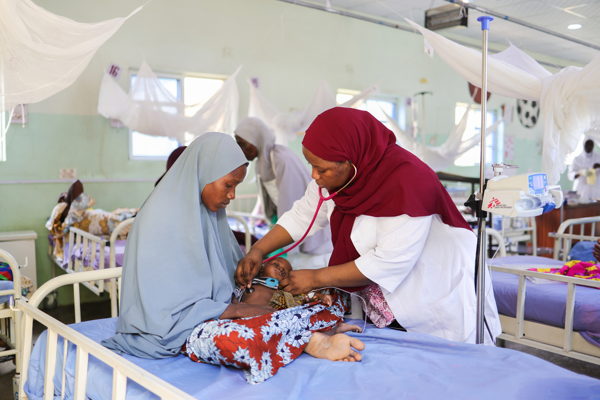
 A patient room in Alamata General Hospital; basic beds and worn walls, reflecting the condition of facilities in the maternity department. Photographer: Metasebia Teshome | Location: Ethiopia | Date: 27/02/2026
 MSF medical team talking with a patient at her bedside in the maternity ward of Alamata General Hospital, following up on her care. Photographer: Metasebia Teshome | Location: Ethiopia | Date: 27/05/2026
20260804_PR_MSF support in Alamata General Hospital.docx
DOCX 33 KB
Jane Rabothata
About Doctors Without Borders (MSF)
Doctors Without Borders (MSF) is a global network of principled medical and other professionals who specialise in medical humanitarian work, driven by our common humanity and guided by medical ethics. We strive to bring emergency medical care to people caught in conflicts, crises, and disasters in more than 70 countries worldwide.
In South Africa, we currently run a non-communicable diseases (NCDs) project in Butterworth, Eastern Cape province, where we support the Department of Health (DoH) in improving care for patients with diabetes and hypertension. The project focuses on improving screening, diagnosis, management, and prevention of NCDs through advocacy, research, health promotion, training, and mentorship of Community Healthcare Workers.
MSF is also recognised as one of the pioneers in providing antiretroviral treatment (ART) in the public sector. It started the first HIV programme in South Africa in 1999. The organisation's earlier interventions in the country have primarily been on developing new testing and treatment strategies for HIV/AIDS and Tuberculosis (TB) in Eshowe (Kwa-Zulu Natal) and Khayelitsha (Western Cape). The Eshowe project was handed over to DoH in 2023 after 12 years of operations. The Khayelitsha project was closed in 2020 after 22 years of activities and campaigning for improved HIV and TB treatment.
Other projects we have been involved in include our Migrant Project in the country's capital, Tshwane, which was handed over to authorities and a local Community-Based Organisation after building the capacity to work with undocumented populations. We also previously offered free, high-quality, and confidential medical care to survivors of sexual and gender-based violence in Rustenburg, North West province.
To learn more about our work in South Africa, please visit this page on our website (www.msf.org.za). To support MSF’s work:
- SMS “JOIN” to 42110 to donate R30 Once-off
- Visit https://www.msf.org.za/donate