Earthquake: Syria and Türkiye one month on
Providing psycho-social support to staff in northwestern Syria

Dr. Bashar Ghassan manages Doctors Without Borders (MSF) psychosocial support care unit (PSCU) in Amman, Jordan. As a psychiatrist, Dr. Ghassan has worked around the world with MSF since 2008, supporting staff and patients. The PSCU is primarily responsible for supporting approximately 10,000 locally hired staff working in 28 of MSF’s projects across the Middle East and North Africa (MENA) region. They offer a 24/7 hotline for staff seeking mental health support, trainings related to staff wellbeing (e.g., psychological first aid, stress management, and communications skills), and individual and group clinical sessions. Here, Dr. Ghassan talks about providing psychological care in the aftermath of a traumatic event and how his team is supporting approximately 500 MSF staff and 300 staff working with MSF-supported organisations in Syria after the February 6 earthquakes.
The earthquake was what we call a critical incident, which requires a totally different psychological intervention and different approach to our regular support. It met all the criteria of a traumatic event: It was life-threatening, unexpected, and unthinkable. The natural response of our staff was fear and panic.
The first thing we did was provide psychological first aid, a very simple training for anyone, even if they don’t have a medical background. The aim is to stabilize people and address their basic needs, moving them to a safe place to avoid further harm and ensuring they have food, water, shelter, and the medications they need. We trained several of our teams in Syria to help staff stabilize in this way.
Then we focus on the trauma. People will respond differently to the same traumatic event depending on their experience and their existing mental health status. For example, our staff in Syria are affected at different levels based on if they were directly exposed to the trauma (i.e., they were in their house when it was damaged during the earthquake) or indirectly exposed (i.e., they witnessed or heard that somebody close to them was subjected to the life-threatening event).
The main response to both situations is fear. People can start to develop flashbacks, where the scenario repeats in their memories either with a trigge like a sound or image or without. The other response is avoidance, avoiding the area where the traumatic event took place. We still have staff that won’t go back to their homes, one month after the earthquake, even though the authorities say it is safe to do so. People can also develop hypervigilance, which means being constantly on high alert and extremely anxious. This can impact their ability to focus or organise their day and can affect their performance at work or their lives at home.
So, what do we do as a psychosocial support unit in such a situation? We have several different tools. The most common one is cognitive behavioral therapy (CBT),a psychosocial intervention aimed at reducing distress by changing maladaptive thinking patterns.
We start by discussing these unhelpful, persistent thoughts, and start to challenge them so that they become less impactful. We do this by connecting the thoughts to some of the behaviors they are trying to address. When people can link these physical symptoms (e.g., hypervigilance) to the mental trauma, they start to recognise that if they can manage the thoughts then the physical symptoms will also start to be manageable.
The other thing we do and perhaps the most important is, a diffusing session between groups affected by the same incident. For example, a group that was working in a certain hospital or living in a certain area when the earthquake struck. We create a safe environment for them to tell us what happened. One objective is to create solidarity between people. The other is to reduce the impact of the trauma. In the beginning it is very painful, the wound is fresh. But by allowing people to talk about their experience, we try to turn it into a scar.
In the future we plan to implement exposure therapy. It’s a technique that can help people overcome their fears by exposing them to the stimulus that causes them anxiety. But we can only do this if we can ensure reliable internet, or be face-to-face, because if you open this door to their fear, you need to be able close it.
Since the earthquakes struck, we have facilitated psychological first aid, diffusing, and several individual sessions. But we know how important face-to-face support is. When we can be in the same physical space as the client, our intervention is much more impactful. I plan to visit the area later this month to provide trauma therapy and plan the next steps for how we can best support our colleagues living in northwestern Syria. Unfortunately, the hardships they live through to not begin or end with this earthquake.
.jpg)
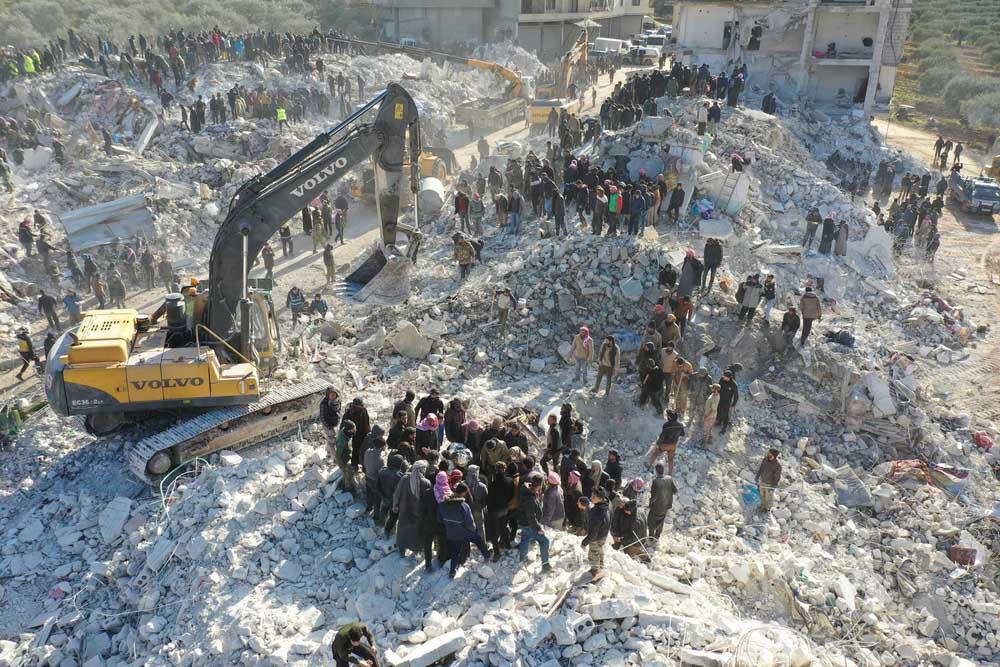
.jpg) View of a destroyed building in Al-Dana city, in Idleb governorate. Photographer: Hadia Mansour. Date: 07/02/2023. Location: Syria
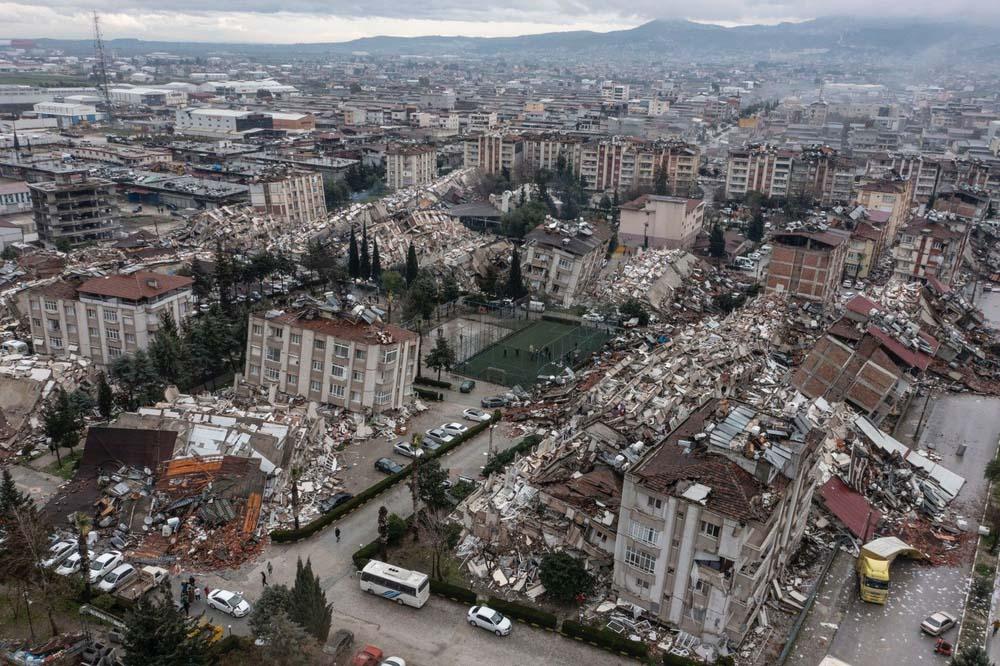
View of a destroyed building in Al-Dana city, in Idleb governorate. Photographer: Hadia Mansour. Date: 07/02/2023. Location: Syria.jpg) The city of Malatya, in south central Türkiye, was gravely affected by the earthquakes that hit Türkiye in February 2023. Photographer: Mariana Abdalla. Date: 05/03/2023. Location: Türkiye
The city of Malatya, in south central Türkiye, was gravely affected by the earthquakes that hit Türkiye in February 2023. Photographer: Mariana Abdalla. Date: 05/03/2023. Location: Türkiye