Doctors Without Borders (MSF) Calls for Assistance to Curb Hepatitis E Outbreak in Chad
Am Timan, Chad
A hepatitis E outbreak is escalating across Am Timan, in the Salamat region in South-Eastern Chad, said the international medical humanitarian organisation Doctors Without Border (MSF).
Since September, MSF has treated 885 patients with Acute Jaundice Symptoms (AJS), with numbers increasing to an average of around 60 new cases a week. AJS, which commonly causes the yellowing of the skin and eyes, can indicate a person has hepatitis E. To date, 70 patients have confirmed cases of hepatitis E (HEV RDT+) while 64 have been hospitalised, and 11 have died, including four pregnant women.
Hepatitis E is transmitted from one person to another, mainly through contaminated water and in areas where access to quality water is limited.
“MSF is calling on all the humanitarian and development agencies present in Chad to step up the size and speed of their efforts to ensure an effective response to the hepatitis E outbreak in Am Timan,” says Rolland Kaya, MSF head of mission in Chad. “More actors are needed to implement preventative actions including water sanitation, especially as cases are increasing in frequency across the Salamat Region, and not only in the city of Am Timan.”
Following the identification of the first hepatitis E cases five months ago, MSF repeatedly called on other organisations to collectively respond to this emergency.
Up to now, the few responses delivered by other actors have been minimal in terms of quantity, quality and timelines. A more consistent intervention is urgently needed, especially in the domain of water and sanitation. Without an immediate scale-up of support from other agencies, and the government of Chad, MSF alone cannot contain this escalating outbreak.
“As a medical organisation, it is not usually MSF’s job to intervene on a large scale in water chlorination activities, but with no other options to help stop the spread of the virus, we are obliged to fill this gap,” says Rolland Kaya, MSF head of mission in Chad. “Once again, we encourage the Chadian Ministry of Public Health to declare the current Hepatitis E outbreak an epidemic to enable the release of an appropriate response.”
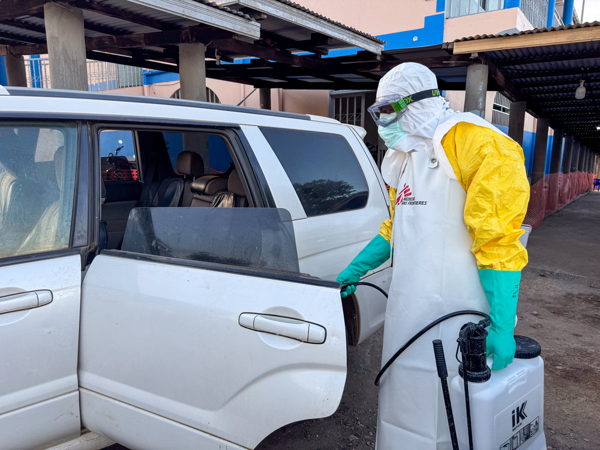
More than 600 MSF staff have been working to test for new cases, treat patients and improve water supplies and sanitation in the city of Am Timan, including chlorination at the city water towers. Water chlorination is a major part of the emergency response to prevent outbreaks of waterborne diseases such as hepatitis E.
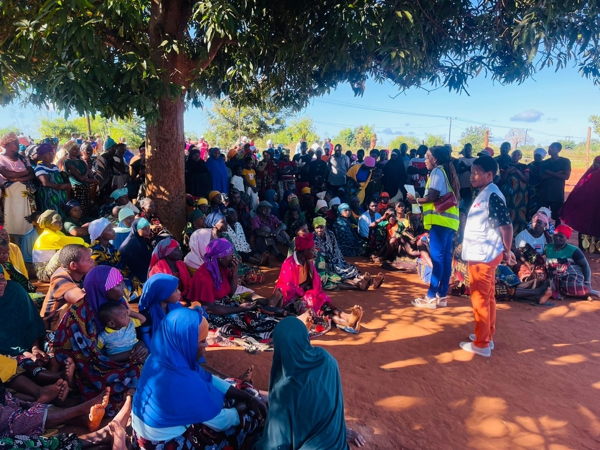
In addition to the medical response in Am Timan hospital, MSF has rolled out a large scale bucket chlorination campaign at the 72 water points within Am Timan town and MSF outreach staff are holding education sessions to explain the importance of hand washing with soap and using chlorinated water at designated water points.
MSF has been working in Chad since 1981. Before the current hepatitis E outbreak, MSF had been running regular medical programmes in Am Timan and in Moissala. Earlier last year, MSF launched an emergency nutrition response in Bokoro where, in partnership with the Ministry of Health, MSF ran 15 mobile outpatient clinics and an intensive therapeutic feeding centre in Bokoro hospital to treat malnourished children. MSF also launched an emergency response in March 2015 in the Lake Chad region for people displaced due to violence by Boko Haram. Teams based in Baga Sola and Bol continue to provide assistance to the people around Lake Chad.


 Health promotion team during en education session. Paired with the medical response (which includes in-hospital care and outreach program), MSF has also rolled out a large scale Hygiene Promotion (HP) program with 24 Hygiene Promoters. The HP’s host education sessions within the community about the symptoms of hepatitis E and each hygiene promoter is responsible for explaining the importance of hand washing with soap and using chlorinating water at designated water points. Salamat Region of Chad. Photographer: Abdoulaye Barry/MSF
 The MSF team in Mirekeke is discussing with local administrative and religious authorities the symptoms of hepatitis E.
A significant number of hepatitis E cases have come from the villages outside Am Timan, where MSF is not present, among them the recent case of a pregnant woman whose baby died on delivery. MSF decided to conduct some randomly quick assessment out of Am Timan to have a clear view of what has been going on. Salamat Region of Chad. Photographer: Abdoulaye Barry/MSF
The MSF team in Mirekeke is discussing with local administrative and religious authorities the symptoms of hepatitis E.
A significant number of hepatitis E cases have come from the villages outside Am Timan, where MSF is not present, among them the recent case of a pregnant woman whose baby died on delivery. MSF decided to conduct some randomly quick assessment out of Am Timan to have a clear view of what has been going on. Salamat Region of Chad. Photographer: Abdoulaye Barry/MSF The water source used by a nomadic community, near the town of Ardo, in the region of Salamat, Chad. A significant number of cases of hepatitis E come from villages outside Am Timan, where MSF is not present, among them the recent case of a pregnant woman with Hepatitis E. MSF has decided to conduct some random assessments for hepatitis E outside Am Timan to have a clear view of what is happening. Hepatitis E is common in countries with poor resources and is transmitted through dirty water and poor hygiene when dealing with fecal matter. The most important thing to prevent the spread is to have safe water and know how to deal with waste management safely. Salamat Region of Chad. Photographer: Abdoulaye Barry/MSF
 Water seller at the water point Dar Bardja in the neighbour of Dar Al Salam, Am Timan. Paired with the medical response (which includes in-hospital care and outreach program), MSF has also rolled out a large scale bucket chlorination campaign at 72 water points within Am Timan town. In total, in a week over 10 million litres of chlorinated water was provided. Salamat Region of Chad. Photographer: Abdoulaye Barry / Médecins sans Frontières